


Introduction
Methane(chemical form: ch4; english: methane) is the most structured alkane consisting of one carbon atom and four hydrogen atoms. It's the simplest of all hydrocarbonsNatural gasThe main ingredients. Methane has a high relative abundance on earth, making it a fuel with great potential for development. Under natural conditions, methane can be found under the ground or under the sea floor, and it also contains methane in the atmosphere, known as atmospheric methane. In the primitive atmosphere, methane is one of the main ingredients。
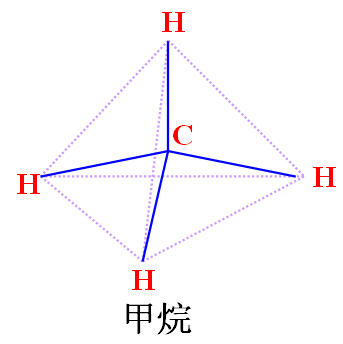
In the primitive atmosphere, methane is one of the main ingredients. History
In november 1776, the italian physicist alexander vaud found methane in lake magure, switzerland, based on benjamin franklin's paper on “flammable air”. Flows of methane were collected in the marshes until 1778, when pure methane gases were successfully separated, and the combustion of methane was determined using electric sparks。
Numbering system
Cas 74-82-8
Mdl: mfcd0008279
Einecs: 200-812-7
Rtecs: pa149,000
Brn: 1718732
Identification
Pubchem: 297
Chemspider: 291
Smiles: c
Gmelin:59
3dmet: b01450
Un no. 1971
Chebi: 16183
Keg: c014338
Mesh: methane
Physical nature
1. Type: non-colour-free and odour-free gases。
2. Melting point (°c): 182. 6
3. Boiling point (°c): 161. 4
4. Relative density (water = 1): 0. 42 (-164°c)
5. Relative vapour density (air = 1): 0. 6
Saturation vapour pressure (kpa): 53. 32 (-168. 8°c)
7. Burn heat (kj/mol): 890. 8
8. Critical temperature (°c): -82. 25
Critical pressure (mpa): 4. 59
10. Octanol/water partition coefficient: 1. 09
Flash point (°c): 218
Trigger temperature (°c): 537
13. Explosive cap (%): 15
14. Lower blast limit (%): 5
15. Solvability: minor solubility in water, solubility in ethanol, ether, benzene, toluene, etc。
16. Lennard-jones parameter (a): 3. 7314
17. Lennard-jones parameter (k): 151. 16
18. Solubility parameter (j. Cm-3) 0. 5:11. 618
19. Area of van der waals (cm2-mol-1): 2. 880 x 109
20. Van der waals volume (cm3 mol-1): 17. 050
Critical density (g. Cm-3): 0. 1627
22. Critical volume (cm3 mol-1): 98. 60
Critical compression factor: 0. 286
Cardiosis: 0. 011
25. Gas phase standard entropy (j. Mol-1. K-1): 186. 38
26. Gas phase standard generation free energy (kj. Mol-1): -50. 5
27. Gas phase standard thermal melting (j. Mol-1. K-1): 35. 69
28. Gas phase standard combustion heat (焓) (kj. Mol-1): 8. 80. 69
29. Gas phase standard claims heat (焓) (kj mol-1): -74. 48
Source toxicological data
Acute toxicity: lc50: 50% (rat inhalation, 2h)
Ecological data
Ecotoxicity
Biodegradability
Abiotic degradability: in air, the degradation half-life is 6a (theory) when the hydroxyl radical concentration is 5. 00 x 105 cm3。
Other harmful effects: greenhouse gases. Special attention should be paid to pollution of surface water, soil, atmosphere and drinking water。
Molecular structure data
1. Mole refraction rate
2, mor (cm3/mol)
3 et al. (90. 2k)
4. Surface tension (dene/cm)
5 media constant
6. Polarization rate (10-24cm3)
7. Single isotope mass: 16,0313 da
8. Name quality: 16 da
Average quality: 16,0425 da
Calculating chemical data
1. Hydrophobic parameter calculation reference value (xlogp): 0. 6
2. Hydrogen key supply: 0
3. Hydrogen key receptors: 0
4. Number of spinable chemical keys: 0
5. Quantity of mutative isomers: none
6. Populator polar surface area 0
7. Number of heavy atoms: 1
8. Surface charge: 0
9. Complexity: 0
10. Isotopic atoms: 0
11. Determination of the number of atomic construction centres: 0
12. Uncertainty of the number of atomic construction centres: 0
13. Number of chemical key construction centres determined: 0
14. Uncertain number of chemical key construction centres: 0
15. Number of covalent key units: 1
Nature and stability
1. No poison. Exposure to methane is dangerous because it can replace oxygen and cause asphyxiation. Short-term exposure to methane can result in dizziness, respiratory difficulties and blue and sensory symptoms in the skin as a result of reducing the oxygen available for breathing. Exposure of skin and eye to liquid methane can cause freezing, and inhalation of liquid methane can cause oral and throat freezing. Attention should be paid to ventilation and leakproof air。
Inhalation in rats ld50:400 x 10-6. When concentrations of methane in air reach 10 per cent, the eye and forehead feel pressure, which can disappear after breathing fresh air。
3. Stability: stability
4. Banped formulations: strong oxides, strong acids, strong alkalis, halogens
5. Consistency hazard: non-composed
Burning chemicals
Methane combustion heat is approximately 55. 5 mj/kg. Burning produces bright blue flames. Methane combustion is a multi-step reaction. The following reactions are part of the process, with the net result described:
Ch4 + 2 o2 → co2 + 2 h2o (Δh = − 891 k j/mol)
Ch4+m* ch3 + h + m ch4 + o2 + ch3 + ho2 + ho2 + h2 + h2 + h2 + h2 + h2 + h2 + ohc2 + h2 + h2
Storage notes: steel bottled contents are stored in a cold, ventilated specialized gas reservoir. Stay away from the fire, the heat. Cowing should not exceed 30°c. Separated from oxidizers, etc., should be used to avoid mixing. Explosive-proof lighting and ventilation. The use of spark-prone mechanical equipment and tools is prohibited. The storage area should have leak emergency equipment。
Synthesis method
This is the simplest organic compound, which is widely distributed in nature and is the main component of natural gas, coal-bed gas and biogas that can be obtained through separation。
1. Separation from natural gas: gas containing 80-99 per cent methane, dry natural gas being cleared and cleaned with wet natural gas and sequestering, absorbing, adsorption and subsequent use of light hydrocarbons above ethane。
2. Oil-field gas separation: natural gas escapes from oil wells when oil is extracted, with dry gas containing 80-85 per cent methane; wet gas containing 10 per cent methane. Liquefied can be used as a chemical feedstock under pressure and condensation。
3. Separation of gas from refineries: 20% - 50% methane in petroleum-processing gases from refineries. By-products of methane, hydrogen or pure methane may be separated from petroleum-processed gases by the absorption of distillation and condensation。
4. Separation from caustic gas: caustic gas contains about 20-30 per cent methane and dry gas contains about 40-30 per cent methane. Methane by-products when separated by deep cooling。
5. Use of methane by-product of natural gas helium lifting devices (composed of more than ch498%) as feedstock, removing nitrogen, oxygen impurities through one or two cryogenic methane distillation towers, and removing more than c2 hydrocarbons by adsorptors, i. E. High-purity methane products of 99. 99% purity。
Purpose
1. In addition to fuel, much of the use is made of synthetic ammonia, urea and carbon black, and can be used for the production of methanol, hydrogen, acetylene, ethylene, formaldehyde, carbon dioxide, nitromethane, hydrocyanic acid and 1,4-butadiol. Methane chlorination can be achieved with one, two, three, and carbon tetrachloride。
High-purity methane can be used in the manufacture of a non-crystal silicon solar cell, for the purpose of adding gas to assist with the corrosion of large-scale integrated circuit drying or plasma corrosive gas. It is also a raw material for the manufacture of ammonia, carbon black, methyl compounds, carbon dioxide and hydrocyanic acid。
3. Industry is used primarily for the manufacture of acetylene or converted raw materials for hydrogen, synthetic ammonia and organic synthesis。
4. For fuel and for the manufacture of carbon black, hydrogen, acetylene, formaldehyde, etc。
Dangerous transport code: un 1971 2. 1
Dangerous goods mark: f+ is flammable
Security marking: s9 s16 s33
Hazard identification: r12









