


Well, i can't tell you what's going on every day
The vast majority of people in life have been flying or seen flying in the sky. Looking at dozens of tons, even hundreds of tons, and flying at square feet, many people have been wondering: why can a plane weigh several dozen tons and fly in empty space
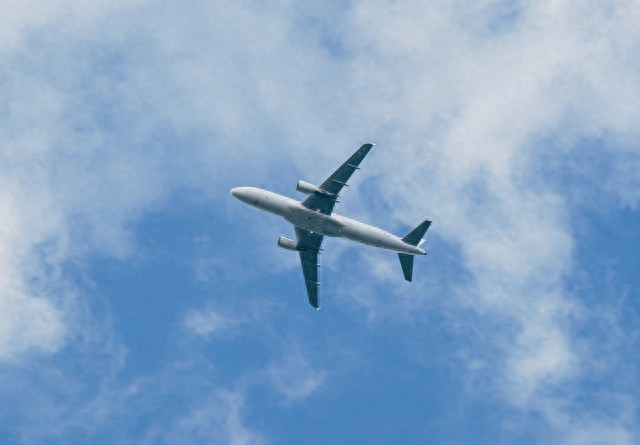
Many have heard various explanations of fragmentation from an early age, some say that the wings blow up power, others say that the engine push is strong enough, and others think that the aircraft fly hard at speed. None of these statements is wrong, but they are incomplete。
The real principles of aircraft flight are not as complex as you can imagine, nor are many science people on the internet saying. Today, i have a full logic of flying, climbing, flying and landing in one-time, without any professional formula, without ingenious terminology, and after reading it, i have a complete understanding of the underlying principles of aircraft flying。
First of all, we have to correct one of the biggest faults: aircraft can fly, not just engine push。
It is natural for many to think that the engine of the aircraft is so powerful that it blows the wind backwards, pushing the aircraft faster and then flying. If you can fly by force alone, the fighter jets and passenger planes don't need wings and just act like rockets。
It is true that rockets break through the atmosphere by force, but aircraft and rockets are the exact same flight logic. The engine of the plane is responsible for one thing: let the plane run and keep moving. The real lifting of dozens of tons of aircraft against gravity comes from a pair of wings。
The core keyword is only four words: air lift。
We can start by remembering one of the core conclusions: that aircraft are larger, and as long as their wings move quickly and cut enough air to produce upward lifts. When the lifting power is greater than the aircraft's own weight, the aircraft takes off from the ground; when the lift and weight are equal, the aircraft can travel at high altitude and smoothly。
This is the core logic of all fixed-wing aircraft, from hundreds of large civilian passenger aircraft to small private aircraft。
So let's get down to the details, and give us a life example that gives us a complete picture of how the lift came about。
A lot of people have played a simple little game, taking an ordinary a4 piece of paper, squeezing the end of the paper, making the paper fall naturally, and then blowing towards the surface level of the paper. And you'll find a very amazing phenomenon, where the paper that's already plumbing, floats directly up, not even lower by the wind。
This simple move is the whole bottom principle of how a plane can fly。
There is a classic rationale in physics: the faster the fluid flow, the less stress. The air is fluent. It's perfectly consistent with that。
The aircraft's wing is not a flat piece of plank, and one can observe the passenger wing at close range and see that the surface of the wing is arc-shaped and the lower surface is essentially flat。
When the aircraft slips at high speed along the runway and sprints forward, the air is cut off by its wings and split into two air streams. The upper surface is an arc, and the air flow requires a longer journey, the speed of the flow becomes faster and the air pressure above the wing becomes smaller. Below the wing is the plane, the air flow is short and slow, and the air pressure is even greater。
Once the pressure is down, the pressure air is up, the low pressure air is up, and the two forces are stacked together, and the pressure is up, that's what we're talking about。
That is why the faster the aircraft, the more steady the flight. The faster the wings are cut, the more the flow is spread, the more the lift is generated。
Many wonder if air can hold up to 70 or 80 tons of passengers, fuel, cargo, when there's an empty 40 or 50 tons of civilian passenger aircraft
Here is a set of real and verifiable data for you: a boeing 737 passenger aircraft with a speed of about 250 kilometres per hour, with an instant lift of up to 90 tons from the wing, which can easily lift the weight of the plane, with sufficient safety savings. Large, wide-body passenger aircraft take off faster, have larger wings, generate a multiplier of lifts, and hold up 100 tons of airframes without problems。
By getting to know the principles of boosting, we can unlock all the doubts about aircraft in our lives, starting with the take-off process, which is of greatest concern to all。
Everyone has experience of flying, which does not take place vertically until it takes off and must accelerate at long distances on the runway. Many people do not understand that they are wasting their time, which is in fact a necessary step towards taking off。
Under static conditions, the wings do not have a relative flow of air and do not produce lift at all, and the aircraft, like iron blocks, can only park on the ground. It is only at an accelerated rate that the wings continue to cut the air, so that the lifting will continue from a very young age to a very large accumulation。
The slow pace and low lift of the first skim was used to reduce the pressure of tyres only slightly, and the aircraft continued to skim. As the speed rises, the lift continues to increase until the lift exceeds the total weight of the aircraft, the pilot pulls the operating pole and lifts the head up, and the aircraft is able to lift off the ground。
This can also explain the second common question: why is it rain, wind, and even impossible to take off
It is not that the aircraft is afraid of rain or that rain will damage the fuselage, the core reason being that bad weather disrupts the stability of the air current. Heavy rains, strong side winds and turbulence can damage the air flow structure up and down the wings, leading to instability and loss of lift power. Take-off is the most critical and risky stage for the aircraft, with a risk of failure and loss of control as a result of instability, and, for the sake of absolute security, the airport will be temporarily suspended。
There's also a doubt as to why a plane can fly at a height of 10,000 metres, and the air is so thin
Many people think it's a cognitive error to be airless. The altitude of 10,000 metres is not a vacuum, but the air density is lower than the ground. Although the air is thin, the flight speed of the aircraft is faster and can reach a speed of over 800 kilometres per hour。
Extremely fast flight speeds, allowing wings to cut enough thin air in unit time to maintain stable lifts. Moreover, the fact that high air is clean and has minimal resistance and that aircraft do not need to consume too much fuel to maintain a steady flight is the central reason for the aircraft to be oil-efficient and stable。
It is equally common to talk about how to land a plane after taking off and cruise。
Many felt that the landing was a slow slowdown and a fall, but not at all. The whole landing route is controlled and the core is adjusted for lift。
When preparing to land, the aircraft will slowly slow down their flight speed, while the wings will spread their wings, sew their wings and, in short, expand their wings. The increase in wing size is intended to ensure sufficient lift at low speed to avoid a rapid fall。
By approaching the height of the runway, the aircraft slows down further and slowly lower than the body weight, the aircraft will sink smoothly, slowly and eventually touch the ground and land。
Here's another cold-door question everyone wonders: how does a plane go down
We watch the fighters on the show, we can flip and fly backwards, and a lot of people wonder, is there no lift in the direction of the arc and the plane
In fact, fighter wings and civil aviation passengers are different and more uniquely designed, while flight principles can be adapted flexibly. When the aircraft goes back, its head will be slightly raised, using tilted wing angles to force changes in the direction of the air current, which can still create downward or upward pressure and generate lift to support the flight. Only these flights are very fuel-consuming and extremely risky, and only combat aircraft can do so, and civil aviation passengers are absolutely prohibited from flying backwards。
Having learned the whole theory, we correct a few of the most widely shared misconceptions, which have been the subject of years of misunderstanding。
The first area of error: the aircraft flew against the tail of the tail。
The role of the tail is not related to the lifting power. It is responsible only for stabilizing the fuselage, controlling the direction of the flight and maintaining the balance of the aircraft, which is equivalent to the wheel and stabilizer of the vehicle, and it does not provide any support, and the aircraft is capable of flying and is dependent on the former mainframe wing。
The second error: the greater the power of the engine, the higher the plane。
The engine is responsible only for providing the power to move forward and determining the speed and thrust ceiling of the aircraft. What really determines the take-off weight, flight altitude and flight stability is the size and shape of the wings. Many small aircraft engines are small, have large wings and can still take off easily。
The third error zone: the faster the plane gets heavier。
There is no correlation, and the fighter jets are far faster than the civilian passenger aircraft, but their body weight is much lower than the full passenger aircraft. The velocity is only related to engine thrusts, air-crowding, and does not directly correspond to the lifting and weight。
And when you're talking about it, you can see that aircraft flight is not a high-tech genre, it's the simplest aerodynamics. The heavy fuselage looks scary, but with high-speed air currents, the lift from the air is perfectly stable to lift up the sky。
Humans invent airplanes, which essentially eat through the flow of air. Flying operations, which appear to be contrary to common sense, are backed by rigorous scientific logic, without any luck or accident。
There's a lot of things in life that we're used toScientific knowledgeI don't know. There is no need for science to be insinuate, to understand these underlying logics, to be able to understand the principles of each take-off, cruise-landing without being magical and confused when flying again。
What did you always think it was for? What's your problem when you fly? Welcome to the comment section。









