


First century a. D., alexandria。
A greek by the name of hiro, with a copper pot, hollow balls and two bends, built a machine that could turn itself up. The boiler base, steaming into the copper ball, turns from two vents, turns the ball and turns to 1,500 turns per minute。
It's called a balloon. "first in the world."Steam engineI'm sorry。
And
Nothing then. It's in the temple as a strange thing to show. The nobles were curious, and the craftsmen looked and turned their heads and continued to do their work. It did not drive any water pumps, did not push any windboxes and did not change any process。
Four hundred and fifty years later, the watts improved steam machine drained water from the british coal mine, turned the sarcasm from the textile factory and put the train on track, turning the world upside down。
The same principle, almost 2,000 years. Why
One: hero didn't think about it. He had no choice
Let's be clear: hero is not stupid. In aerodynamics he wrote, dozens of mechanical devices were written, with steam shifting balls, with compressed air opening doors and with water pressure pouring alcohol. He knows better than anyone else that steam works。
But it's clear, it's not necessary。
The energy conversion efficiency of the balloon is about one percent. You burn a hundred pounds of wood, and the output is nothing but a pound of wood. The remaining 99 pounds, all burned white. Hero himself knew that he had never mentioned in his book that it could be used to produce, but that it was presented as a fun device。
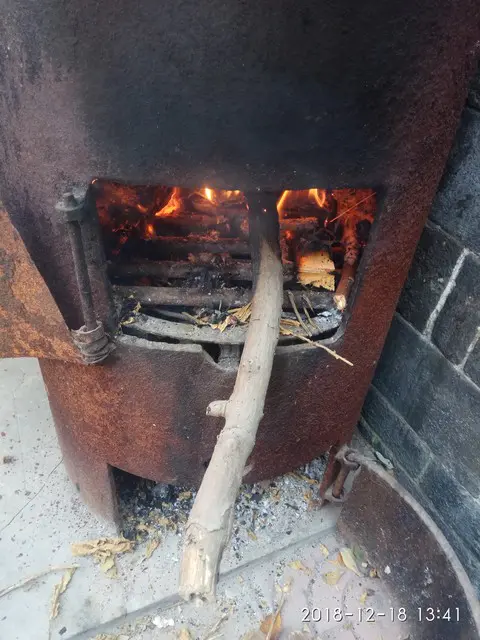
But inefficiency is not the worst. The worst part is:Ancient greeceSlaves are cheaper than steam。
And the port of alexandria was full of slaves. Stones, windboxes, water carts, grinding are all dry by slaves. You have to open a workshop, buy two slaves. It won't cost much. You have to build a steamer to do the same thing, copper for money, craftsmen for money, firewood for money, maintenance for money. Count it down, there's a lot more to it than there is a machine。
This is the plainst of the law of productivity suitability: whether technology survives does not depend on how well it happens, but on whether society has a reason to use it。
Ancient greece has no such reason. Slavery provides the cheapest and most accompanied “power source”, and steam engines are not qualified to come。
Two, light doesn't work. It has to be something
Back to the point, even if someone really wants to turn the ball into a utility steam engine, what does he do
To build a working steamer, you have to have a boiler resistant to pressure, a sophisticated piston and gas tank, a sealed material that can withstand high temperature and high pressure, and a moving apparatus that transforms the back movement into a rotational motion. None of this is available in ancient rome or in ancient greece。
What's their steel? A piece of iron. Burn iron ore and charcoal together, burn a half-melted sponge, and exercise again and again. A piece of the stove has to be smashed to get iron. To what extent is it inefficient? This method of iron refining was used by europeans until the fourteenth century, when liquid raw iron was barely refined。
At the same timeChinaThey're already doing something they can't even think about。
Three, china, the furnace is burning
6th century bc, late spring and autumn。
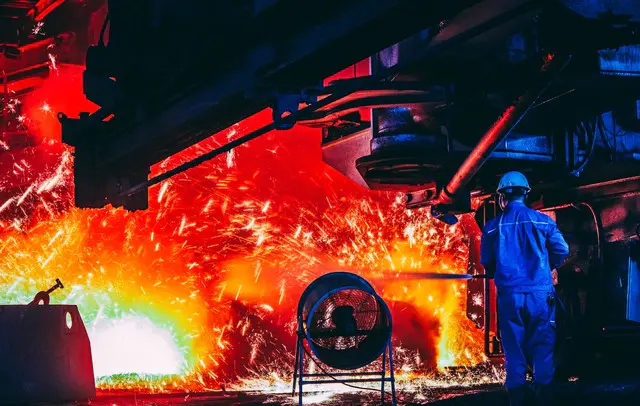
The chinese have invented a technique: ploughing iron ore and charcoal into high furnaces, burning them to more than 1150 degrees, turning iron into water and flowing from the bottom of the furnace. It's coming out of the iron and pouring into the mold and trying to make something。
That's the liquid iron smelting。
Europeans did not learn until the fourteenth century. Chinese are 2,000 years ahead of them。
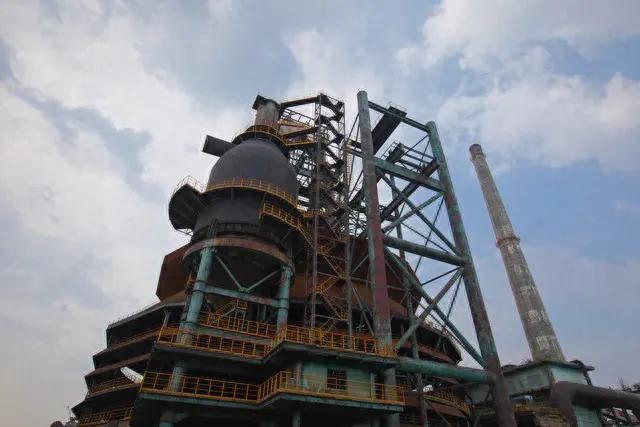
The handell metallurgy site in the town of guangzhou, henan province, was dug up in two high furnace bases. The stove is at an effective height of six metres, with a base area of 8. 4 square metres and a ton of iron produced daily. The temperature of the furnace is measured at 1460 degrees. Handicrafts also provide elliptical shapes to the ovens, especially for the failure of the wind to blow the centre of the furnace。
The stove alone is not enough. The larger the stove, the more violent the wind is needed, otherwise iron water will not come out unless the central temperature fails。
In the early years of the east han, south ying tai po invented one thing: the drain。
Water tankers drive the poles and turn the rotational motion of the water flow into the back and forth of the skin. A water drain, capable of holding several sets of man or horse. It says in the history books, "i don't know how hard it is, but it's hard enough for the people." during the tri-country period, han and zhang extended the water supply to the wei national service camp to provide a comprehensive alternative to human and animal energy. When the water comes up, the stove can go up, the cask can go up, and iron production goes up。
This is the living example of “tools determine ceilings”. Without drainage, you cannot have a six-metre-high furnace; without a furnace, you cannot have a stable supply of iron water; without iron water, what do you use to make agricultural tools, weapons, mechanical parts
Four: fuel, china is ahead
Refinery requires fuel. Charcoal, of course, has a hard wound: it burns too fast and costs too much. Burn an iron, cut a forest. When the forest is cut off, the stove has to stop。
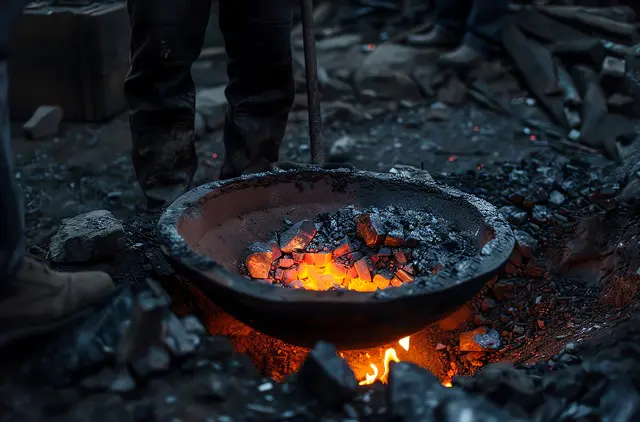
The chinese move faster than anyone on fuel。
In the hander metallurgy site of the henan gangay trench and the town of guangzhou in zhengzhou, archaeologists excavated coal cakes — cylindricalized with coal powder and clay, used specifically for kilns and iron refining. Some of them are already slaged, others are burned on the surface and can see black coal. What does that mean? This means that the west hanes are systematically using coal as fuel, not by chance picking up a piece of coal and throwing it into the fire。
North wei dynasty's water episode, which drew an earlier record, stated that there was a mountain north of tortez, that “the night was burning, the day was smoked”, and that the local people “take the rock and the iron from the mountain”. It's made of coal. It's in the geography book。
By the time of song, coal-melting has become widespread to the point where sugi is specializing in poetry. He found a coal mine in xuzhou and was pleased to write a poem called "calcoal", which said: "the southern mountain chestnuts are dying, and the rock is not working hard." the translation is: there's no tree cut, there's iron。
Compare the ancient greeks: what is hero's volleyball burning? Firewood. One percent energy efficiency, fuel and most expensive firewood. In the fuel chain, ancient greece didn't even touch the door。
Five, two paths. Two results
Looking back, ancient greece and china took two completely different paths。
The ancient greeks have developed abstract geometry, logic, atomology, and the principles of a balloon. Their strength is to think, to understand why it is。
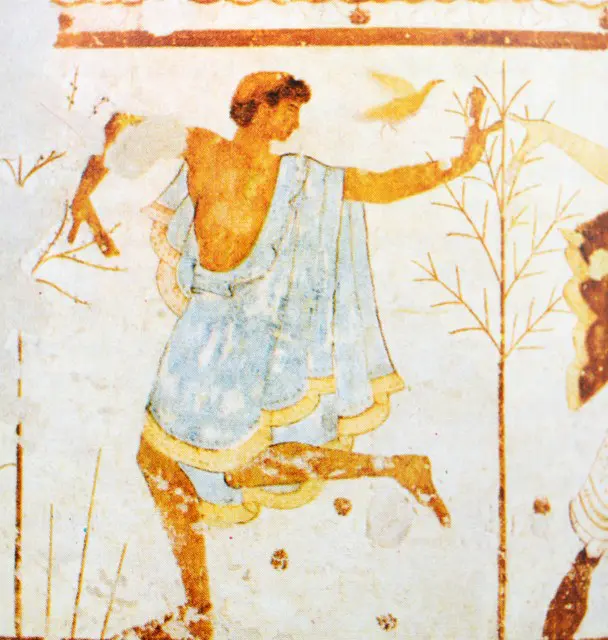
The chinese made a furnace, a water drain, a coal cake iron, and a ton of iron. The chinese's strength is to “do”, to make things work。
It's not about who's smart and who's stupid. This is what society needs。
The slave economy of ancient greece does not need to be power-saving. Slaves are machines and are better than any machine — no maintenance, no fuel, no fights. In this society, steam engines can never be a toy。
China's agricultural economy needs iron. We're going to waste, we're going to fix water, we're going to fight, we're going to build tools. The demand for iron pushes forward the technology, with furnaces, drains, coal fuel, being pushed out one by one。
This is what productivity laws say: technology does not come out of space, it is society that needs to be driven out. There's no need, and the logic of coincidence is in vain. Without accompanying energy and material systems, the best ideas cannot be put on the ground。









