


Overview
FormaldehydeThis post is part of our special coverage syria protests 2011ChemicalHco, mass 30. 03, also known as antaldehyde, naturally present organic compounds。
Non-colored irritating gases have irritating effects on human eyes, nose, etc. A 40% volume formaldehyde water solution is called 100% formalin. Gas relative density 1. 067 (air = 1) and liquid density 0. 815 g/cm3-20°c. It is mainly used in the production of industrial resins, such as plaques and coatings. The annual production of formaldehyde in 1996 was about 8. 7 million tons。
The 2011 national toxicology programme of the united states describes formaldehyde as a “known human carcinogen”。
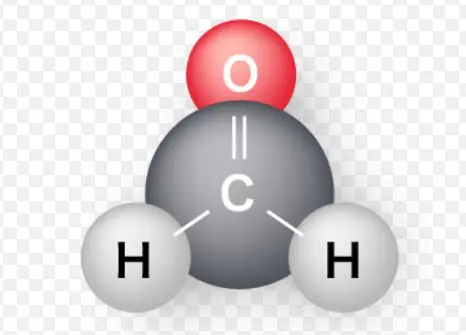
The molecular properties of formaldehyde
Type: a non-coloured gas with a strong irritant and asphyxiating scent。
2. Relative vapour density (g/ml, air = 1): 1. 081-1. 085
3. Relative density (g/ml, water = 1): 0. 82
4. Refraction rate (nd20): 1. 3755-1. 3775
5. Flash point (°c): 56 (gas); 83 (37% water solution, closed cup)
6. Boiling point (°c): 19. 5 (gas); 98 (37% water solution)
7. Melting point (°c):-92
8. Self-fired temperature (°c): 430
Vapour pressure (kpa, 57. 3°c): 13. 33
10. Explosive limit (v/v): 7% ~73% of air
11. Logarithmic (logp) of the partition coefficient for oil and water ( kol/water): 0. 35
12. Critical temperature (oc): 137. 2 ~ 141. 2
Critical pressure (mpa): 6. 784 ~ 6. 637
14. Sticky (mpa. S,-20oc): 0. 242
15. Lower blast limit (%, v/v): 7. 0
16. Exploding cap (%, v/v): 73
17. Solvability: soluble in water and ether. Aqueous solution concentrations can be up to 55%. It is free to mix with water, ethanol and acetone. Gradual oxidation of aic acid in air is a strong reduction agent. It forms an explosive mixture of vapour and air, with burning explosions caused by open fire and high heat. In general commodities, 10-12 per cent of methanol is added as a inhibitor, or there is polymerization。
18. Gas phase standard burning heat (焓) (kj mol-1): -570. 77
Gas phase standard claims heat (焓): -108. 57
Gas phase standard entropy (j. Mol-1. K-1): 218. 76
Gas phase standard generation free energy (kj. Mol-1): -102. 5
22. Gas phase standard thermal melting (j. Mol-1. K-1): 35. 39
Toxicological data
1. Acute toxicity
2. Subacute and chronic toxicity
3. Mutagenicity
4. Reproductive toxicity
5. Carcinogenicity
6. Formaldehyde is highly irritant to the eyes, the respiratory tract and the skin。
Create identification
Cas: 50-00-0
Pubchem: 712
Chemspider: 692
Smiles: c = o
Inchi: 1/ch2o/c1-2/h1h2
Inchikey: wsfssnumvmomr-uhfffaoyat
Beilstein: 1209228
Gmelin: 445
3dmet: b00018
Un no. 2209
Einecs: 200-001-8
Chebi: 16842
Rtecs: lp 8925000
Dragbank;db03843
Keg: d00017
Mesh: formaldehyde
Iuphar formulation; 4196
Ecological data
1 metabolism and degradation. The oxidation process for formaldehyde is as follows: 2hchoh 2hcooh+o2 - 2h2o+2co2
Residues and accumulation。
3. Migration conversion。
3. Migration conversion. Combustion (decomposition) products: carbon monoxide, carbon dioxide。
Molecular data
Molar refraction rate: 6. 53
Mor (cm3/mol): 43. 8
Pyramid (90. 2k): 82. 6
4. Surface tension (dene/cm): 12. 6
5, even extreme distance (d): 2. 33168 (1d=3. 33x10-30c. M)
6. Polarization rate (10-24cm3): 2. 59
StructureData
Molecular configuration: flat triangle
Isopolar: 2. 33168 (1) d
Calculating chemical data
1. Reference values for hydrophobic parameters (xlogp): 1. 2
2. Hydrogen key supply: 0
3. Number of hydrogen key receptors: 1
4. Number of spinable chemical keys: 0
5. Quantity of mutative isomers: none
6. Populator polar surface area 17. 1
7. Heavy atomic quantities: 2
8. Surface charge: 0
9. Complexity: 2
10. Isotopic atoms: 0
11. Determination of the number of atomic construction centres: 0
12. Uncertainty of the number of atomic construction centres: 0
13. Number of chemical key construction centres determined: 0
14. Uncertain number of chemical key construction centres: 0
15. Number of covalent key units: 1
Nature and stability
1. Formaldehyde is the simplest form of formaldehyde, usually classified as saturated monalde, but it is equivalent to dual formaldehyde。
Chemical properties: pure formaldehyde has a strong reduction effect, especially in alkali solutions. Formaldehyde itself can slowly condensate and is particularly vulnerable to polymerization。
2. Toxic. Inhalation of formaldehyde vapour can cause nausea, nasalitis, bronchitis and compostitis。
3. Exists in tobacco leaves, mainstream gases, side-stream gases。
4. Formaldehyde is highly polymeric and under different conditions。
5. Composed formaldehyde into polymers for storage and transport。
Storage methods
1. Formaldehyde is a gaseous state at constant temperatures, usually in the form of aqueous solutions。
2. 200 l (53usgal) drums of preservative materials for transport with a net weight of 200 ~210 kg, vehicles or troughs。
Storage temperature 4°c
Methanol dehydrogenization use of methanol oxide by synthesis method
Formaldehyde is an important organic material and is used mainly in the plastic industry (e. G. Phenol resins, platinum plastics - electrode), synthetic fibres (e. G. Synthetic vinicium - polyethylene alcohol indentation formaldehyde), leather industry, medicine, dyes, etc。
Formaldehyde may also be made of synthetic resins, surfactants, plastics, rubber, leather, paper, dyes, pharmaceuticals, pesticides, photographic films, etc。
3. Timber industry, textile industry, preservative solution, food industry, analytical reagents such as ammonium salt determination。
4. Formaldehyde is the first generation preservative. It has a good effect on the extinction of fungus, coli, fungus, yeast and other gland bacteria。
To be used as a reduction agent for chemical copper plating, for the analysis of electroplating solutions and for the formulation of zinc plating additives, etc。
Security information
Dangerous transport code: un 1198 3/pg
Dangerous goods marking: f flammable t toxic
Security marking: s26 s36/s37/s39
Hazard identification: r34 r40 r43 r23/24/25









