


There's an electrical outage in the house, a grid outage, and there's an invisible guard behind itZero sequence current sensor(zero ct). It seems to be the last line of defence for the safety of the people and equipment of the power system, and today it is once and for all understood its principles, its role and its taboos
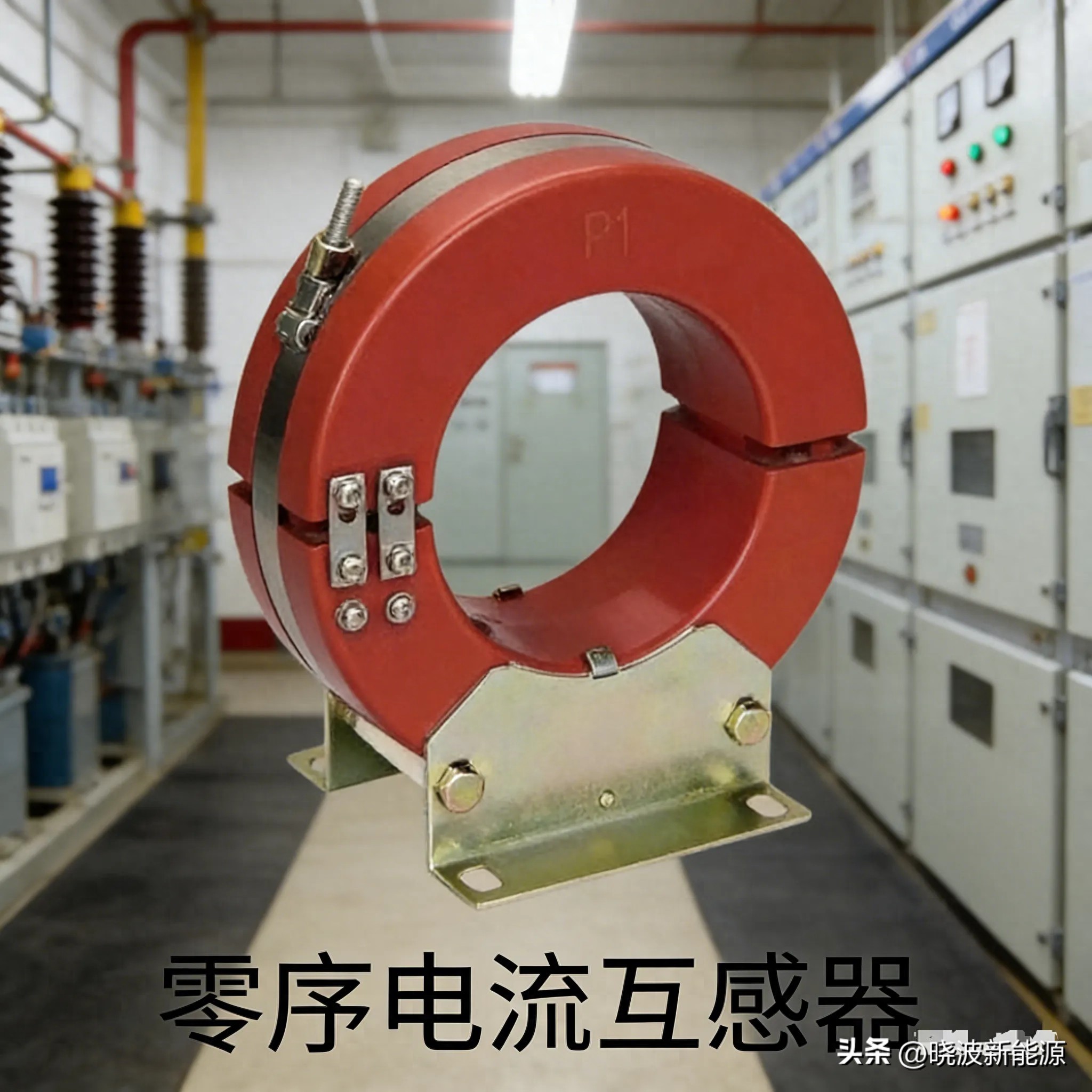
First, understand first: what is a zero-series current sensor
Ct is the special sensor specializing in the detection of “zero sequence currents” (in short, leaks, abnormal currents resulting from ground failure) and the largest difference between normal current sensors is that it is a ring iron core structure, and the a, b and c triconductor of the electrical system + neutral line n, which crosses together from the middle of the ring iron core, which is equivalent to a “single cross-cutting” design。
It's not directly involved in the power supply, but it's capable of 24-hour "surveillance" on the circuit, and if anything happens, it's sending a signalProtective devices, avoid an accident spreading。
Key principles (common version, read and understood)
Core logic: “sleeping” when the balance is balanced and “awaken” when a malfunction occurs。
Normal working state: the size, direction and direction of the a, b and c three-phase currents of the circuit are equal, their vectors and 0 (simple understanding is “mutual offset”). At this point, there is no cross-magnetic field in the iron core of the ct in sequence, so that the second side does not generate sensor currents, the protective devices are not moving and the circuits are properly powered。
Fault status (default/place): when there is a single phase, a human contact, a failure of equipment, or a severe imbalance in the three-phase current, the vector and zero of the three-phase currents cease to be zero, producing a “excessive” current — zero sequence. The current will pass through the ring iron core, creating a transmagnetic field, prompting a zero-order ct secondary sensor to react to the current signal, transmit it to the leaking, zero-order protection device and quickly cut the fault lines。
For example, when electricity leaks from home appliances, currents flow to the ground through humans or the equipment casings, the three-phase currents are unbalanced. The anomaly is immediately detected by the zero sequence ct, which triggers the leaking bail-out, the power outage within 0. 1 seconds, and the loss of electrocution。
Core role: why is it a “security guard”
The role of the zero sequence ct is a single core - capture the failure signal, drive the protective action, divided into three points, covering the high-pressure, low-pressure scene:
Protection of personal safety: specialized detection of small leaks of electrical power at ma level, triggers leakage of bail-outs, and prevents physical accidents (especially low-pressure scenes such as homes, sites, etc.)。
Protection equipment and electricity grids: quick capture of single-stage failure, triggers high-pressure zero-order protection or low-pressure leakage, prevents failure of electrical currents from burning cables, transformers, and prevents failure from escalating to more severe short-range circuits and even causing electrical fires。
3. Early warning: insulation is used in small current systems (e. G., 10 kv high-voltage lines) for insulation surveillance, early detection of insulating lines, alerts, and avoidance of further malfunctions。
Iv. Focus! Installation + use attention (must look, avoid error)
In many cases, the sequence ct “failure” is not a problem with the quality of the equipment, but is not installed or used properly. These taboos must be borne in mind:
(i) installation due diligence
1. Wiring must be regulated: the triconductor (a, b, c) and neutral line (n) shall be co-ordinated with the ring core that passes through the zero-order ct, which cannot be missed, mistrapped or worn only in one or two phases (otherwise, the action may be mistaken or rejected)。
2. Avoiding additional wiring interference: no connection, branching or entanglement in the lead that passes through the iron core (which alters the twirl, leads to a decrease in detection accuracy or even miscalculation)。
3. Placement pairs: low-pressure scenes (house, shop), zero-sequent cts are usually installed after the entry of the general switch, prior to leakage; high-pressure scenes (wire stations, circuits) are installed in cable terminals, switch cabinets, close to the area where the failure may occur to ensure timely transmission of the signal。
4. Locality: the second end of the zero sequence ct must be reliably connected (one-point approach) to prevent high pressure, damage to equipment or endangering personal safety on the second side of the road, while avoiding interference with detection signals。
(ii) use of attention
1. Ban secondary roads: this is the key taboo! Once the ct side is opened, it produces extremely high induction voltage, which not only burns the sensor itself, but also causes a physical electrocution, and daily inspections must focus on the strength of the secondary line。
2. Matching protective device parameters: ct-zero-sequenced mutations, apertures, must match the corresponding leakage, zero-sequenced protective device parameters, and cannot be replaced at will (e. G., a deviation from the ratio would result in the protective device refusing to move or jumping by mistake)。
3. Periodic inspection maintenance: regular clean-up of dust and oil on the surface of the sensor, examination of whether the steel core is damaged and whether the wire is loose; low-pressure scenes recommend that precision be tested once a year, and high-pressure scenes be periodically verified in accordance with the inspection specifications to avoid detection failure due to the ageing of equipment。
4. Avoiding environmental interference: installation away from powerful magnetic field equipment (e. G. Large transformers, frequency transformers) to prevent magnetic field interference with detection accuracy; outdoor installation requires waterproofing, damp-proofing to avoid rain infiltration to damage internal components。
Summary: its importance and irreplaceable
In short, without a zero-order electrical current sensor, the electricity system cannot effectively detect electricity leakages, ground failures — the failure of home power leaks will not jump, the failure of high-pressure lines will continue to expand, and the risk of physical shocks, equipment burning and electrical fires will increase dramatically。
It's like the “eyes” of the power system, 24 hours of silent surveillance, “calls the police” as soon as an anomaly is detected, and secures the safety of persons and equipment. It is indispensable for household electricity, industrial production and grid operation。
Last reminder: in case of frequent break-throughs in routine electricity use, in addition to checking electrical appliances, you can check the ct connection and state in zero sequence to avoid security risks due to inappropriate installation









