


Signal generatorIt is a test instrument capable of producing various frequencies, waveforms and ranges of telecommunications, which is widely used in the fields of electronic research and development, production testing and maintenance of communication systems. Its core function is to generate a telecommunications number with specific parameters through analogue or digital circuits, to provide standard input sources for equipment to be tested, to help verify circuit performance, debugging system parameters or to detect signal transmission quality. According to technical principles, a signal generator can be divided into two broad categories: analogue, which produces a signal directly by oscillating circuits, and digital, which relies on digital signal processing techniques to achieve higher accuracy。
In the case of analogue signal generators, the working method is based on oscillating circuit design, which controls the output frequency by adjusting the parameters of components such as capacitor, sensor, etc., and uses wave-shaped integer circuits to generate common wave shapes such as sine, square, triangle, etc. For example, a model analogue signal generator with a lock-ring technique achieves greater frequency stability than ± 1 ppm, with output ranges ranging from -140 dbm to +13dbm, and meets the stringent requirements of communication equipment for signal accuracy. Its application scenarios include radio frequency module testing, audio device calibration and sensor signal simulation, especially in scenarios where continuous adjustable signals are required, with the analogue signal generator becoming the preferred tool with low phase noise properties。
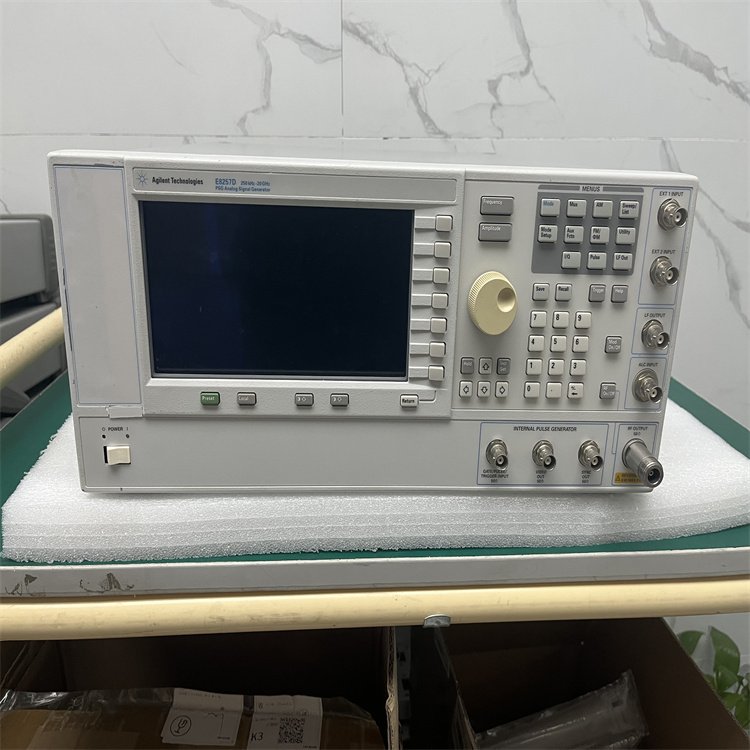
Digital signal generators produce signals through direct digital synthesis (dds) technology, the core of which is the synergy between high-speed digital circuits and digital modems (dac). Dds technology produces wave-form samples by tabulation method, which is converted to analogue signals by dac, then filters high frequency fragmentation through low-transform filters and ultimately produces high purity signals. Such equipment usually has a higher frequency resolution (at the dharmi hz level) and a faster frequency switching speed (at the microsecond level) and applies to scenarios requiring rapid jump frequency or complex moded signals, such as 5g base station testing, radar system development and software definition radio (sdr) experiments. The advantage of a digital signal generator is that any waveform generation can be achieved through software programming to meet the test requirements for non-standard signals。
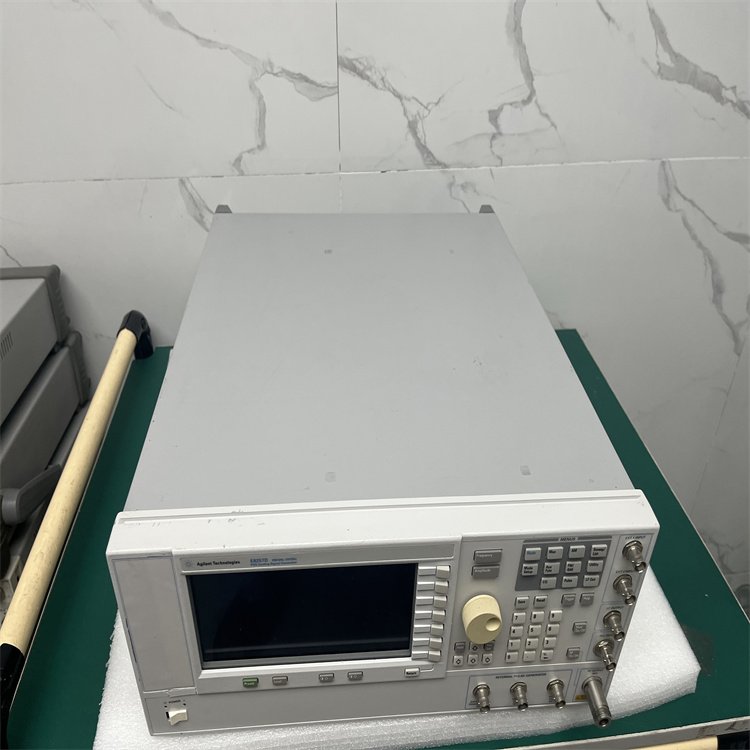
In practical applications, the choice of a signal generator takes into account parameters such as frequency range, phase noise, output power and modem. For example, communication equipment testing requires attention to the spectral purity of signals in order to avoid dispersing signals from the observation system; the audio equipment calibration guidelines need to focus on the indicators of distortion to ensure that signals are tested for accuracy. With the development of electronic technology, modern signal generators have integrated advanced functions such as vector signal analysis and real-time spectrum monitoring, further expanding their application boundaries in emerging areas such as physical networking and autopilot。









