


The value of ammunition differs from that of warships and targets to be destroyed. Carbonized tungsten material, though expensive, is currently the best option compared to the use of radioactive depleted uranium material. In order to answer the question of our 1130-near anti-aircraft artillery material, there is a need for the principles of attack and explosion of the weapon defensive from the close artillery, andArmour-piercingThe evolutionary history of tungsten metal is also assessed against the benefits of other materials as armour-piercing material. After all, the price of tungsten tungsten pellets is much cheaper than the warships for which the close anti-aircraft is to defend. When the cannon goes off, the gold is gone, the war can never be measured at price, and it is best if it can be achieved quickly and effectively
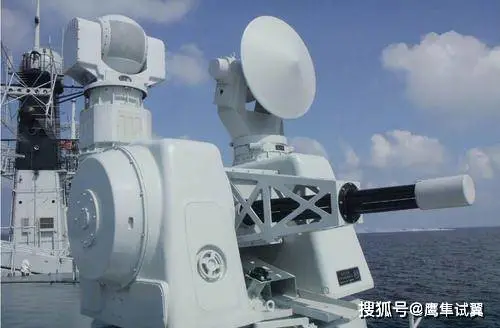
What are the characteristics of anti-ship missile-type weapons, which are the main defences of the close defence gun
The early soviet-made anti-ship missile battle department was relatively simple, essentially destroying targets by means of a massive load that hit a warship. A typical feature of this type of missile is that it is used to destroy targets by force, which requires that anti-ship missiles must be loaded in sufficient quantities to meet their needs at all, so that early missiles, such as the river styx, are so heavy that they can be loaded to half a ton。
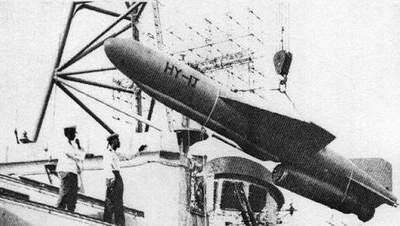
With the development of technology, active anti-ship missiles have abandoned the stupid structures of the past, no longer relying on force to destroy targets, and the load has decreased accordingly. Our well-known flying fish missiles are filled with only a few dozen kilograms. In this way, the size of the missile can be small enough to save weights that can be used to increase the range or to increase the power of the missile by adding to the load. Because of the low load, anti-ship missiles are required to have some armour-piercing capability, and it would be preferable to strike them inside the warship before they explode, so that the internal explosion would have a greater damage effect。
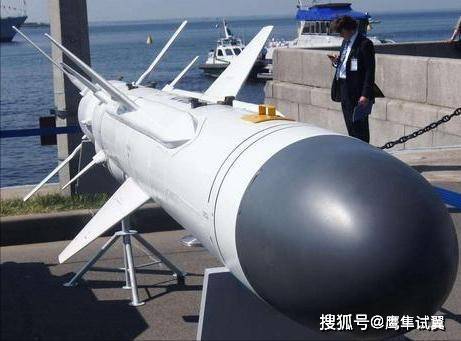
Modern anti-ship missiles typically rely on their own kinetic energy to penetrate the ship's outer casings, and warhead materials use high-strength steel to ensure that they do not damage themselves in the course of anti-armour operations against warships. Delayed explosion by the effect of a delay explosive fuse. The lethal destruction of thousands of tons of warships can be achieved provided that explosions inside them are guaranteed, even if they are in possession of only 50 kg of high explosives. Attention, the point we would like to point out is that the anti-ship missile itself's battle-body shell is a detachment of the armour, and if the close defensive weapon is to destroy it, then the anti-ship missile's battle-body shell becomes its own hard armor, which can be effectively destroyed in the future only if it is pierced
Why do you use armour-piercing bullets? What was the evolution of armor-piercing bullets
Here we have the structure of the anti-ship missile. As the last defence force for a warship, the close defence gun itself is approximately three kilometres away or even shorter. In the face of high-speed incoming missiles, they will only explode in the air, otherwise anti-ship missiles will still cause damage to warships. In fact, the close-deficit gun has to fully penetrate the anti-ship missile warhead. This is like a tank, which can explode outside if it cannot be pierced or completely destroyed. That is to say, the close-defence gun has the same operational rationale as the anti-tank operation. It's also a armour-piercing mode based on kinetic energy. We don't need explosives in our own combat unit. We just have to hit the target! So the ammunition used in the close defense is mainly armour-piercing
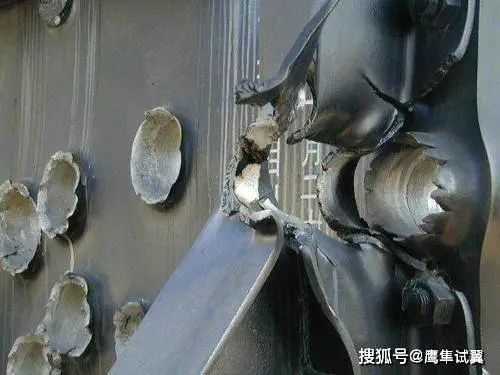
Armour-piercing munitions, as a kinetic weapon, rely on their own speed advantages to achieve operational effects. As long as the speed is sufficient, even a brick can pierce a tank. But it's all a matter of idealism, and in fact, the evolution of armour-piercing munitions has evolved gradually, and now we see the tail-stabilized dehuming armour-piercing munitions are just the latest product on the evolution of their armour-piercing rounds
With the presence of tanks, their destruction became an important technical challenge on the battlefield. The tanks are also working hard to build their own armor in order not to destroy themselves. Early armour-piercing rounds were, in fact, just steel-made sharphead shells, and there were fighting units inside. As the tank armour grows stronger, it is highly susceptible to jumping in an inclined direction after impact. So this armour-piercing bullet was quickly eliminated。
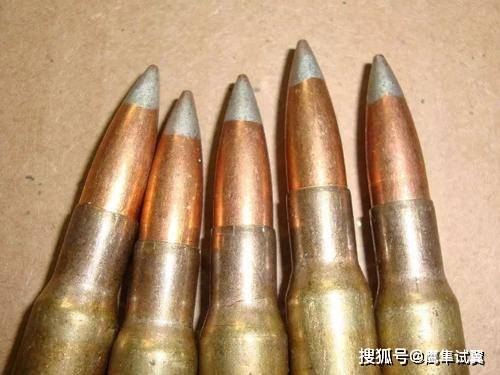
The sharp-head penetrating bullet was replaced by a blunt penetrating bullet designed specifically for tank tilt armour. When the shell hits the tilted armour, since the warhead is almost a plane, the antiactivity of the tilted armour automatically brings it to the armour-piercing effect. Attention is drawn to the fact that, because the blunt-headed armour-piercing warhead has only a small bump in the central part, it is highly susceptible to outside air interference during flight and, in order to stabilize the armour-piercing missile flight, it is usually possible to build a windcap for the armour-piercing bomb, so that the ammunition has the same aerodynamic shape as the sharp-head-piercing bullet when flying。
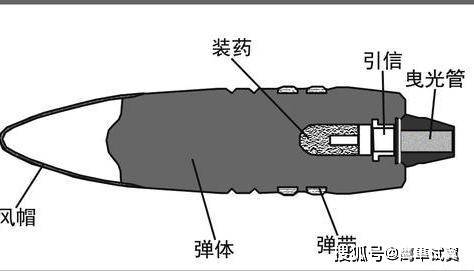
On the basis of a blunt head-piercing bullet, it evolves beyond a type of armour-piercing bullet known as a cap-piercing bullet, a simple combination of a blunt head-piercing bullet and a point-piercing bullet. The structure of these armour-piercing bullets is essentially a blunt welding outside the warhead of the point-piercing weapon, which is an inert material that can be pierced by the tip of the back at the time of the attack! Put another hood outside the head. When cap-piercing bullets come into contact with the target, the blunt head is put in charge of correcting the ammunition and at the same time smashing out a pit outside the target armor, which can effectively reduce the problem of cutting the warhead's edge and achieve better armouring
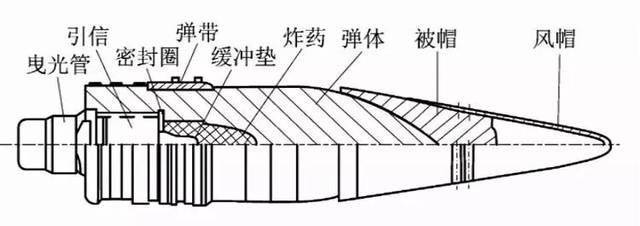
These are the early stages of the evolution of conventional armour-piercing munitions, and it is noted that at this time the armour-piercing munitions were filled with internal drugs, i. E. Whether they were damaged or largely dependent on the explosion of the fighting department. As the tank armour grew thicker, traditional armour-piercing bombs became increasingly difficult to sustain. The next development of armour-piercing munitions will enter the second half of the course, from explosive to kinetic
In contrast to the post-armour injuries to the inside of the tank, it was discovered that even if the armour-piercing bullet did not explode through the armor, the resulting fragments would cause total internal destruction, so that, in order to increase the speed of the ammunition, the armour-piercing bomb would no longer be filled. It also produced a new type of subcalibre armour-piercing bullet. In the age of artillery, the initial speed of the gun was reduced by the weight of the ammunition, i. E., the speed entered a bottleneck period, at which time to increase the kinetic capacity of the armour-piercing bomb would have to be found in the area of the armour-piercing material and the penetrating area。
To give you the assumption that the size of the penetrating area of the same calibre shell is equal, does it mean that the same kinetic energy can achieve greater penetration if the area of the penetrating area can be reduced? At least theoretically. For example, the calibre of the penetrating bullet is 100 mm. Would it mean that a hole of 100mm would have to be pierced in order to pierce the armor? As a result, armour-piercing bombs also entered an era called sub-calibre armour-piercing. On the surface, armour-piercing ammunition is still the original shell, except that the armour-piercing process is carried out by a heavy-density carbonated tungsten core inside the armour-piercing bomb so as to guarantee a smaller penetrator to complete the penetration of the armoured target。
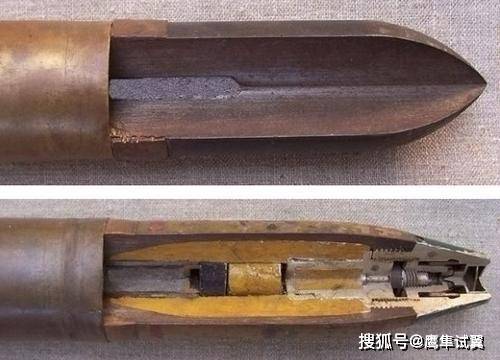
Sub-calibre armour-piercing munitions are not yet the evolutionary end of the latest now, and in operational applications, sub-calibre armour-piercing munitions, consisting of the body and core, have suffered a severe deterioration due to increased wind resistance. Under the kinetic energy formula, we know that velocity decline means a reduced kinetic energy, and how can a armour-piercing bomb that relies on kinetic energy to effect a armour-piercing effect become impervious? As a result, sub-calibre armour-piercing rounds were quickly phased out and replaced by recoil-stabilized shell-piercing. The actual operation proved the deeper penetration effect of smaller perforations, which only affected the depth of the armour-piercing core by the wind resistance of subcalibre munitions, so could one core be fired? Isn't that the least that can do? But what about the shells? This is the origin of the de-hull, with the design of a cross-tail wing in the tail of the core, which is conducive to the flight stability of the core, since the core is smaller in diameter, so that a armour-piercing bomb can be launched with a larger calibre barrel in order to gain greater kinetic energy, with only one shell shell casing attached to the core. In the event of a penetrating chamber, the outer shell and the core are separated, leaving the core to fly towards the target, thus addressing the decline in speed during the flight of the penetrator, as well as the issue of smaller calibre cores from the same calibre. At least for the time being, it's a perfect design, but the development of weapons and equipment is constantly evolving, and we can only wait for what kind of armour-piercing bullets will develop in the future
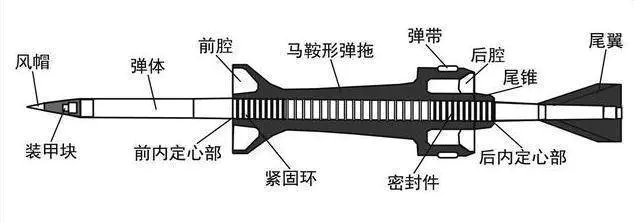
The above is the evolution of the armour-piercing bullets that we have shown you, from which we have discovered that the armour-piercing rounds have gone through a long time, from the original tip of the head to the latest strangulation of the tail. The material was also converted from original steel into better-performing carbonated tungsten alloys. Still, tungsten carbonized itself has a very high density, which allows the cores to have greater penetration without fragmentation! This material, while expensive, is of no value to the target to be attacked! The difference between the price of a main battle tank, which is generally over $5 million, and the price of a tail-stabilized de-hull penetrating bullet, which is just over $100, is not a star and a half point
The value of tungsten cores is not very valuable in relation to the warships that are supposed to defend them
The main purpose of equipment development is to achieve operational objectives, not simply to save money. If an ordinary 30mm-calibre ammunition were used to save money on an anti-aircraft gun, even if the incoming anti-ship missile was hit but the warhead was not armoured, the missile would have hit the warship. The price of a 30mm tail stable de-hull-piercing bomb purchased by our country is around rmb 1100, and the total value of a 1130-near defence gun, even if it is to be fully discharged, is only rmb 1 million. Such a price would be less than the value of a single fire-control radar。
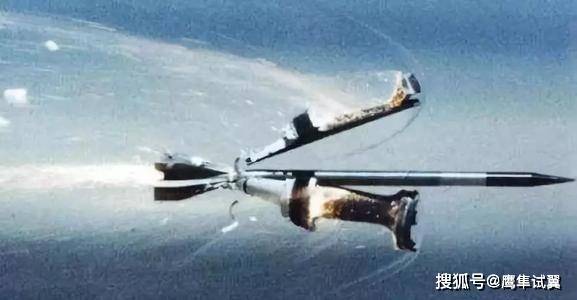
On the other hand, the fact that warships rely on close anti-aircraft intercepts to attack missiles suggests that missiles are very close to them. Even an anti-ship missile flying at subsonic speed takes only a few seconds to reach a warship, let alone ultrasonic anti-ship missile, even if it is intercepted at a limit of 3 km from the close anti-aircraft range. The time left for military vessels to react is very limited. If we can't guarantee the destruction at this point, we'll have to calculate the value of the armour-piercing bullet
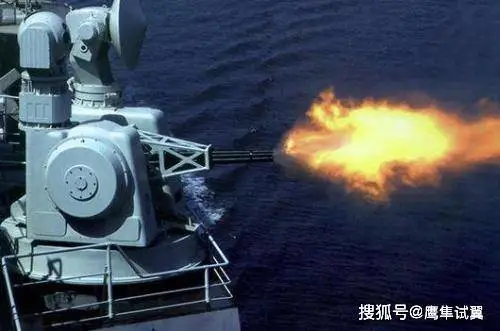
The current cost per 5,000-ton warship is in general more than $500 million, a value that cannot be discounted. The value of the ammunition that 5,000 tons of warships are equipped with is less than 3 million yuan, which is not worth much to the navy









