


Hello, i'm v:xixinke79. This is the information i've compiled, and i hope it will help you。
In industryAutomationAndMechanicalIn equipment, it is often necessary to detect the location or state of the object, thus controlling the operation of the equipment。Limit switchAndApproaching switchesTwo commonly used location detection devices. While they are functionally similar, there are significant differences in the rationale, structural characteristics and application scenarios。
1. Limit switches
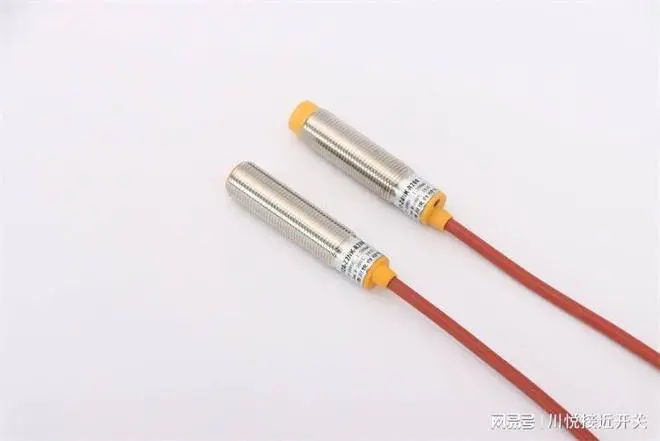
The limit switch is a switch that detects the presence or arrival of an object in a specific position through mechanical contact. The core principle is physical contact。
(1) rationale
The limit switch usually has a contact body within which there is a moving implementing agency (e. G., shaking arm, wheel or pusher). When motion objects come into contact with this implementing agency and divert it from their creation, they drive internal contact movements, changing the circuit connection or disconnection. The telecommunications signal is then transmitted to the control system (e. G. Programmable logical controllers), which suspends the operation of the equipment, changes the direction of movement or performs other operations according to a pre-set logic。
(2) main types and characteristics
Depending on the form of the external implementing agency, the limit switches can be divided into different types, such as:
- shake arms: with a lever arm, it is suitable to detect objects from side。
- rolling wheel: at the end of the implementing agency, there is a roller wheel suitable for continuous contact with the cam or mobile parts。
-plunger (direct): directly pushes the top-string action through the object。
The main feature of the limit switches is the need for physical contact with the object being tested. They are usually structurally strong and able to withstand some mechanical shocks and harsh environments. At the same time, its internal contact points are used to produce mechanical wear and electric sparks, with a certain useful life limit。
(3) typical application scenario
The limit switches are widely used in a variety of settings requiring terminal protection of motor processes. For example:
- on cranes or elevators, to set the maximum position for rise and fall and to prevent equipment from operating beyond limits。
- in numerically controlled machine beds to define the range of movement of processing platforms or blade frames。
- on the automatic door, to detect whether the door is fully open or closed。
2. Approaching switches
The proximity switch is a sensor that can detect the existence or proximity of an object without mechanical contact. It works through physical field changes caused by the proximity of perceived objects。
(1) rationale
Depending on the sensory principle, the proximity switch is divided into the following categories:
- telesensory approach switches: metal objects can only be detected (usually ferrous metals). There is a convulsive circuit inside which, when a metal object approaches its sensor surface, it creates a vortex within the object, leading to increased energy depletion or a halt in the oscillation of the convulsion circuit, thereby exporting the switch signal。
- capable approximation switches: almost all materials can be detected, including metals, non-metals (e. G. Plastics, wood, liquids). It acts by detecting changes in the contours of the object as it approaches。
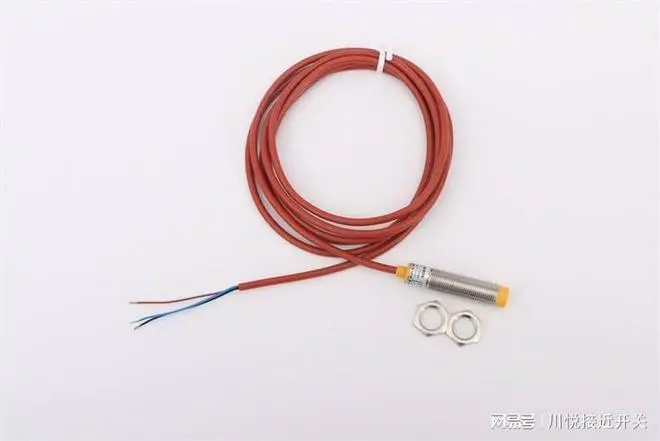
- hole approach switches: using the hole effect, magnetic field changes are detected and are therefore primarily used to detect permagnetics。
- photoelectric approach switches: it works by launching beams and detecting light that is reflected by the object or that is shielded by the object. It is also a non-contact detection method, but is usually classified separately。
(2) main types and characteristics
The core characteristic of proximity to switches is non-exposure testing. This brings many advantages:
- no wear: due to lack of physical contact, no mechanical wear, long useful life。
- no sparks: applies in situations with blast-proof requirements。
- high frequency of response: objects capable of detecting high speed motion。
- environmental tolerance: good sealing and adaptation to bad conditions such as dust and oil pollution。
The limitation is that detection distances are usually relatively short and that detection accuracy and effects are influenced by the material, shape and environment of the object being measured。
(3) typical application scenario
The proximity switch, because of its non-exposure properties, is applied in situations requiring high reliability, frequency or non-accessibility. For example:
- on automated production lines, for counting, positioning or judging the availability of products。
- in mechanical equipment, as source or speed detection sensors。
- in the manufacture of cars, check for locks, pistons, etc。
3. Comparison and selection of limit switches and approaches to switches
A combination of application needs, environmental conditions and costs is needed when choosing whether to use a limited switch or to approach it。
(1) means of detection
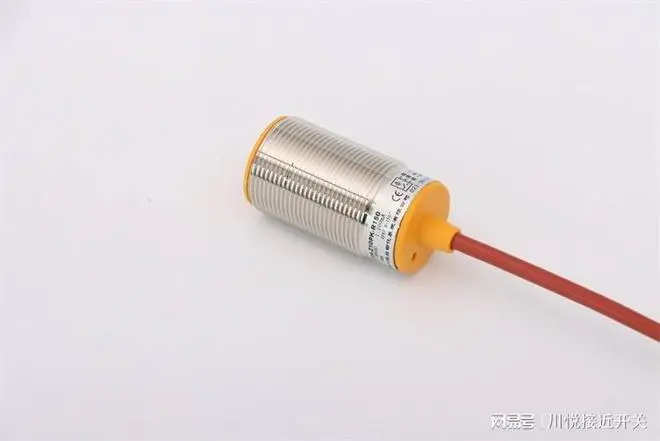
That is the most fundamental difference. The limit switch is contact, and the proximity switch is non-contact. If there is a need to avoid mechanical force on the object being tested, or if the object itself is fragile and unfit for contact, the proximity switch should be chosen。
(2) detection of objects
The limit switches detect almost any solid object, regardless of its mass. Different types of proximity switches, such as electro-sensor detection of metals only, are selective to the material of the object, with a wider scope of application。
(3) environmental adaptation
The mechanical structure of the limit switches may not be reliable in a highly vibrating environment and its contact points are also vulnerable to dust and oil pollution. Close to the switch is better overall sealing and is highly resistant to vibration and pollution. However, in the context of strong electromagnetic interference, some proximity switches may be disturbed。
(4) speed and lifetime
For high-speed motion objects, the non-contact approach switch responds faster and has a longer theoretical lifetime because it is not worn. The mechanical actions and contact lifetime of the limit switches limit their application in very high frequency settings。
(5) cost and installation
In applications that are simple, low-speed, cost-sensitive and accessible, traditional limit switches usually have price advantages and are intuitively installed. Acquisition costs close to switches may be slightly higher, but their long-term maintenance costs are low and installation flexibility is higher。
4. Summary
Limit switches and proximity switches are indispensable “feel organs” in automated control systems. Limit switches, with their simple structure, low cost and robust and durable features, remain important in situations where direct mechanical triggers and end protection are required. The proximity switch, by virtue of its non-contact, non- wear-out, high-speed and high-reliability advantages, is increasingly being used in modern high-automatic, high-notch production equipment。
In practical applications, engineers need to make reasonable choices between specific subjects, work environment, performance requirements and budgets. In some cases, they also work together in the same equipment, performing their respective roles and working together to ensure that the equipment is operated safely, accurately and efficiently. Understanding their rationale and differences is the basis for proper selection and maintenance。









