


Number of readings: 3356
Chinese university of geology, beijing, 2023
Zhang shihong
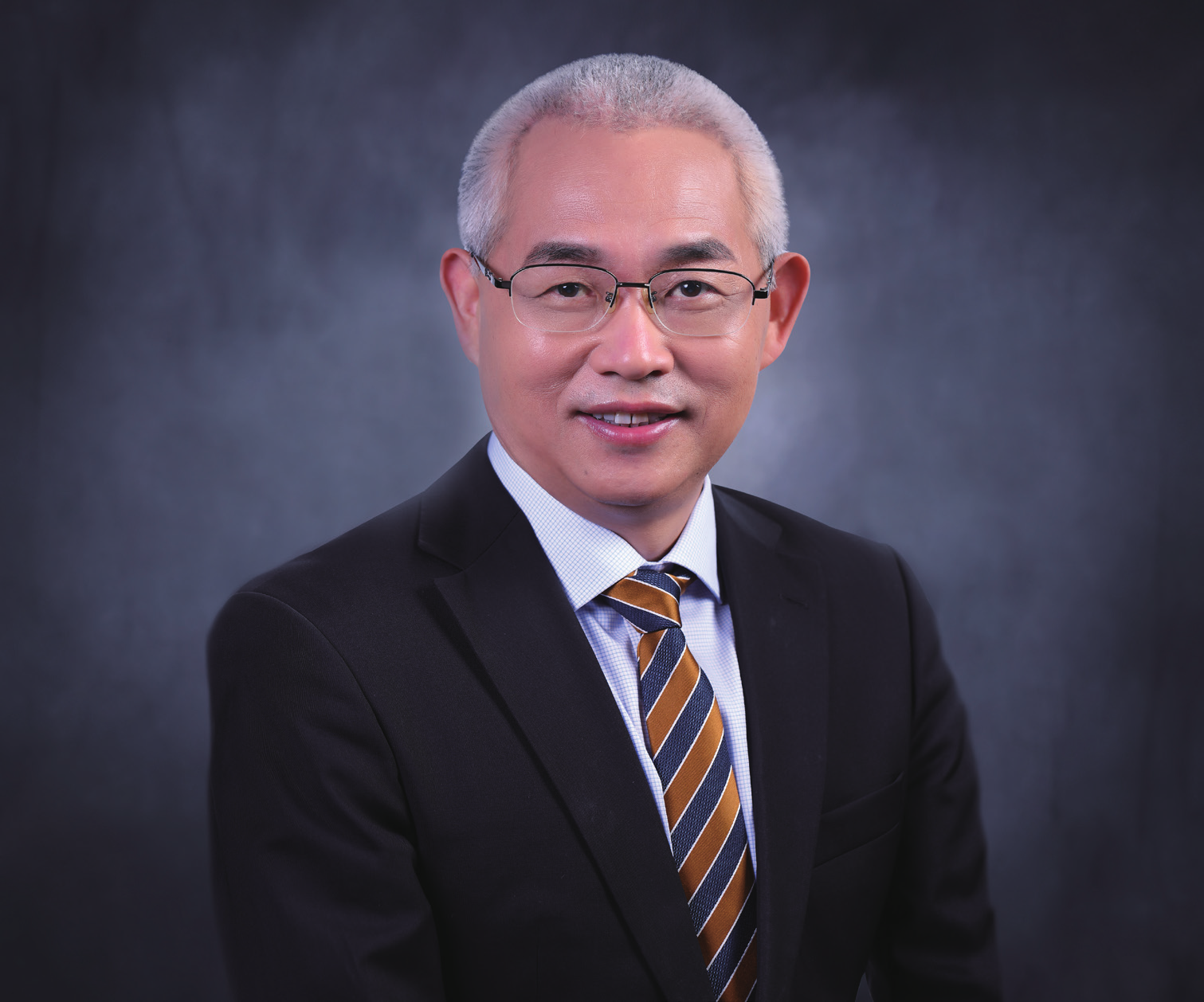
Zhang shihong, male, han ethnic group, born in june 1964, a civil rights county of henan province, a non-partisan person, doctoral degree, second-level professor at the institute of earth sciences and resources of the chinese university of geology (beijing) and doctoral student mentor. Present deputy director of the national priority laboratory for biogeological and environmental geology, board of editors of the chinese-english version of science geosciences, and deputy editor-in-chief of journalophe georgicalsocyty. Chaired the priority projects of the national fund for natural sciences and the ministry of education's programme of support for outstanding talent in the new century. First prize in science and technology for territorial resources, special state department government grant, elected to the american geological society in 2021。
I'm learning, and i'm very interested in teaching, peachy
Professor zhang shihong has spent more than three decades working in geological research and education, with a long-standing philosophy of teaching, and is well placed to incorporate the results and experience of research into teaching and to involve students in research. He is not only the creator and diffuser of new knowledge, but also the guideposter of young talent。
I. Scientific research and results
Professor zhang shihong has long been active in the fields of ancient geomagnetics, tectonics and science. Systematic academic results with significant international implications have been achieved in areas such as the pre-cold-war supercontinental evolution, the new millennium snowball event, true polarization and the evolution of east asian geotectonics。
He chaired the completion of a number of priority projects of the natural science fund, projects on the ground and research and development projects of the ministry of science and technology. Using the technological combination of ancient magnetism and thorium isotopes, a number of high-quality ancient magnetic results were obtained in north china. The system illustrates the pattern of changes in the ancient latitudes of north crazon in the middle of gengozo. A new configuration of the nuna supercontinental was proposed using a concoction of the polar shift curve, which demonstrated the characteristics of the supercontinental, mainly the completion of the polymerization, the fragmentation of the ~1. 3ga and the long-term "break-in" of the kraton basin within the supracontinental context. The idea of linking north china to kraton, north australia, in nuna supercontinent, north china to north australia, north china to north carolina to north-west laurent and siberia, reveals a massive global reshuffle during nuna's conversion to rodinia, challenging the earth's evolution model known as "a billion-year-old sanctuation in the middle of genko."。
Professor zhang and the research team have played a key role in the generation of high-precision volcanic ashstone age in the steep mountains of china, the manganese, the south, the five streams and the maze, in the formation of regional layers of age, in the delineation and duration of ice periods, and in the study of the causes of carbon drift events in edikaria. In recent years, rotational studies of the pond slope group, combined with isotope age, have created high-resolution astro-climate scales for the large pond slope group, accurately extrapolating the start of the southern ice period to ~650m, which is the best estimate of the beginning of the marinoan snowball event to date. Zhang shihong and others have also obtained several high-quality geomagnetic results with an accurate isotope age limit in the southern ganges, steep mountains, slabs, ~770 ma and ~832 ma-based walls, revealing the movement of south china from the polar regions to the low latitudes of the equator during the ~820 ma to the cold war period, suggesting a trend towards slower real migration over a billion years and a pattern of a genuine acceleration due to hypercontinental fragmentation. A link between south-west china and the northern part of the indian continent in the late stretch was established using ancient magnetic methods, presenting the global geographical characteristics of the south china-india high-latitude continental group at least from ~810 ma away from low-latitude continental groups such as lauren. This series of results presents a powerful challenge to the traditional rodinia hypercontinental configuration and its fragmentation era, and also provides a scientific basis for global geogeographic background studies of snowball earth。
Professor zhang shihong and the research team also carried out research on ancient geomagnetics, age studies and deep tectonics of mountain belts in large areas of china, north china and mongolia, with important results on key issues in the tectonic evolution of tetis and ancient asia. He presented the ancient tectonic geography model of the southern china plate, which was connected to the ancient ancient lands of the gwana continent and divided by the late mud; the tectonic tectonic tectonic tectonic tectonic tectonic tectonic patterns and the deep tectonics of the mountains, which were closed down by the ancient asian and middle mongolian-outsk oceans。
Professor zhang shihong has published more than 200 papers, of which more than 100 are sci papers, which have been cited over 11,500 times. The proposed nuna hypercontinental model was incorporated into the new united states history course (the earththroughtime, 2016, johnwiley &sons, inc.) and our national specialty geology course, the short curriculum for geohistory. 2018, geology publishing house and the "columbiasupercontinent" in wikipedia make important contributions to the development of ancient magnetology, pre-cold-war geology and tectonics。
Ii. Teaching a teacher, peach li fong
Professor zhang shihong is committed to the party's policy of education and is politically committed. He tried to do his duty. In the course of 28 years of postgraduate tutorship, he/she teaches and prepares students for home situations, awareness and commitment. Fifteen of the graduate students directed were proud to join the party during their studies. In 2022, he was elected to the beijing municipal curriculum as a teacher of thought and a teaching team。
He develops the practical, innovative and collaborative skills of graduate students. Through the organization of major scientific projects and international cooperation, students are brought to the international academic arena. In combination with the characteristics of scientific research projects, inter-grade and interdisciplinary graduate students are invited to form joint scientific and technical cooperation teams to develop their capacity for cooperation in practice. Focus on cutting edge and innovation in the selection of degree thesis. The results of postgraduate studies as first authors were published extensively in top academic journals such as scienceadvances, geology, epsl, jgr and grl. The post-graduate studies have been developed on a sound basis, with a strong capacity and with a back-up momentum. One of the graduates was subsequently promoted to lead a leading national programme of excellence by the national fund for natural sciences, the jeongqing project and the national priority research and development programme; three were elected to the departmental ministerial programme; and many held key leadership positions in the sector。
Prof. Zhang shihong values academic ethics education, upholds academic integrity and guides students to participate actively in social services and fulfils academic obligations. Among the graduates, one served on the board of editors of two international academic journals, and two served as secretary of the international great science programme, the dde antigeomagnetic international working group。
Iii. Intensive and dedicated efforts
Professor zhang shihong is currently part-time deputy director of the national priority laboratory for biogeology and environmental geology, and has made a prominent contribution to the development of laboratories and disciplines in the field of life and environmental research in our deep school。
Zhang shihong is also currently an editorial editor of the british society of geology, a voting member of the international geology commission for the classification of the ice layer, a editorial board of the chinese and english editions of the chinese journal of science, chinese science: earth sciences, a editorial board of the journal of geology and city geology, a standing board member of the national council of geology and a deputy director of the magnetic geology chapter of the national council, a deputy board member of the antique magnetic professional committee of the chinese society of geology, a board member of the vice-director of the scientific committee of the former tyrandy sciences and a committee of city geology professionals. Served as co-chair of the international working group on ancient magnetism in the context of the international great science programme dde. He has served on numerous occasions as guest reporter or convenor on the topics of the international geological congress, the annual meeting of the agu and the annual meeting of the cgu, and has been dedicated and dedicated to the scientific community at home and abroad, with great prestige and influence in academia。









