


Rogowski coil is a type of electron-transmitting deviceSensors, widely appliedElectricity systemAnd industrial control and scientific research. Its unique design and working principles enable it to accurately measure large currents without direct contact with detected circuits. This paper will explore in depth the workings of the ro-circleElectromagnetic inductionThe rationale goes to precise measurement methods in its practical application。
Fundamentals of electromagnetic induction
The philosophy of the ro-circle is based on faraday's electromagnetic sensing law, which states that when the magnetic flux in a closed circuit changes, the circuits generate a sensory motor. The mathematical expression is:
Among them is the induction of electric motion, the b is the magnetic flux through the circuit, the t is time。
The structure of the loop loop
The routing usually consists of the following parts:
1. A circle around which multiple fine lines are constructed, usually spiraled or ringed。
Magnetic cores: in some designs, the coil will be surrounded by a magnetic core of a non-magnetic material (e. G. Air or plastic)。
3. Output end: the two ends of the coil are connected to the measuring device for the output of the induction of electrical motion。
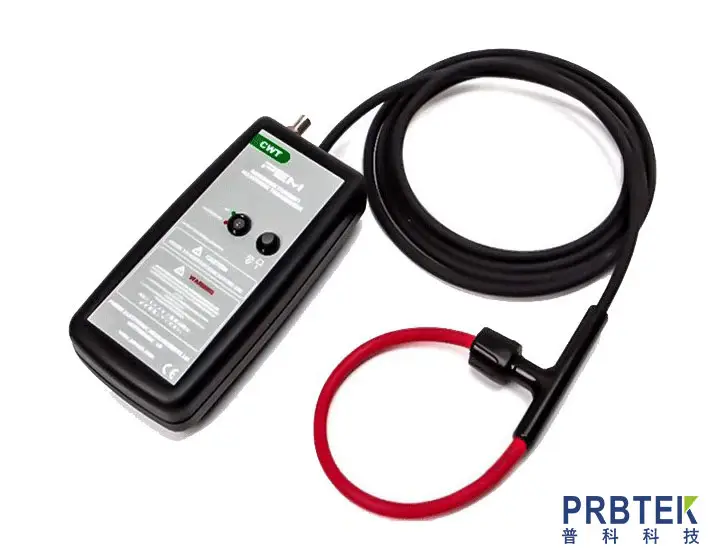
Rationale
When the radial circle is surrounded by the detector, the flow of communication currents in the conductor creates an intersection magnetic field around it. According to the faraday law of electromagnetic sensing, this meta-magnetic field produces induction electric motion in the roscope. The process is as follows:
1. Magnetic field generation: the exchange current in the detected conductor i(t) produces the intersection magnetic field b(t)。
Magnetic flux changes: an intersection magnetic field b(t) produces a variation of magnetic fluxes via a rounded circle of compasses Φb(t)。
3. Sensory electric motion: in accordance with faraday's laws of electromagnetic induction, the altered magnetic fluxes Φb(t) generate sensorial motion in the online circle。
4. Signal processing: sensible electrical motion is connected to the measuring device by the output end, and is processed with a graded signal, resulting in the exact value of the detected current。
Key elements of accurate measurement
In order to achieve precise measurements, the design and use of the compass will need to take into account the following key factors:
1. Imbalance of the circle circle: the homogeneity of the circle circle directly affects the distribution of magnetic fluxes and the accuracy of the induction electric motion。
2. Selection of magnetic core material: non-magnetic material can reduce magnetic demurrage and vortex depletion and improve measurement accuracy。
Signal processing technology: due to the positive ratio of sensor electric motion to the conductivity of the detected current, it is usually necessary to restore the original current signal by a fractional circuit。
4. Temperature compensation: temperature compensation measures are required because temperature changes affect electrical resistance and perception in the coil。
Practical application
The loop has a wide range of applications in a number of areas, including but not limited to:
Power systems: to measure large currents in high voltage transmission lines to ensure the safe operation of the power systems。
2. Industrial control: in electrical control and transmissions, use is made to monitor currents in real time and to improve control accuracy。
3. Scientific research: in the laboratory, for the measurement of pulse and high-frequency currents, in support of various scientific experiments。
Conclusions
The roal coil as a non-contact patternCurrent measurementSensors, whose working principles are based on the principles of electromagnetic induction. Through rationally designed and precise signal processing, the rotor coil can achieve high accuracy measurements of communication currents. In practical applications, the ro-circle, with its unique advantages, has become an indispensable tool in the fields of electricity systems, industrial control and scientific research。
The above was compiled and shared by general science/prbtek, and the westampke electronics technology ltd. Is working on an instrumentation and annex i station supply platform. Main area: research, production, sale of accessories to oscilloscope tests. The products include electrical current detectors, differential probes, high pressure detectors, passive detectors, soft current detectors, near-field detectors, current sensors, radio frequency test cables, various instrument test attachments, etc. More information is available on the website:









