


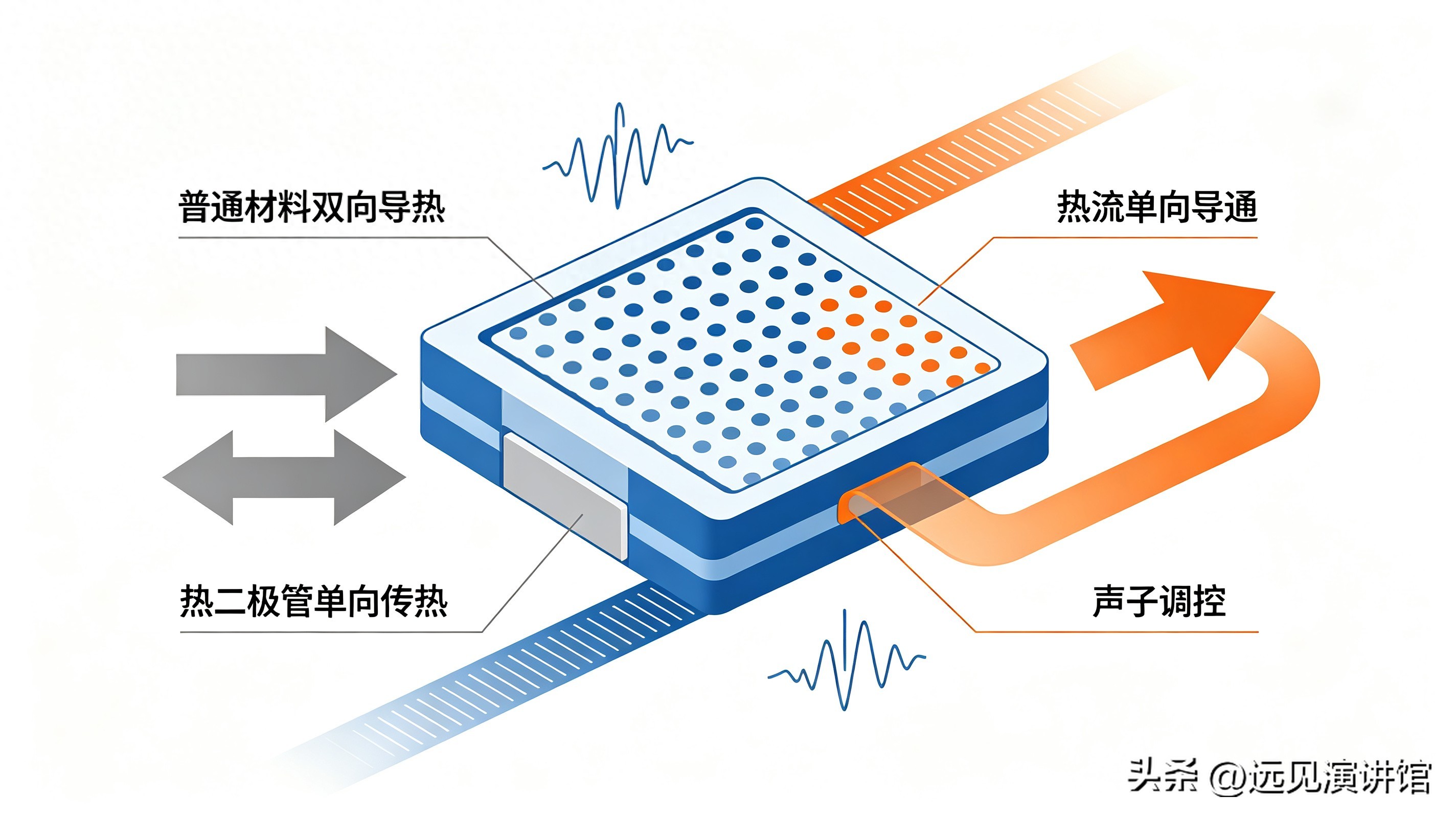
Figure : a diagram of the underlying principles of the thermal diodes; thermal diodes achieve a single flow guide relative to the general materials' two-way heat
We're all familiar with electro-diode tubes. The current can only pass one way. But the vast majority of people don't know: the calorie can theoretically also set up "one-way."。
There is an inherent characteristic of the general material of the real world: the heat is a two-way symmetry. A piece of copper, a end heat b end cold, heat is passed from a to b; in turn b end heat is cold, same flow of heat is passed from b to a, and the heat is not automatically "permitted to enter or enter". This poses a difficult problem for chips, power cells: the chip works, and we want the heat out quickly; when the outside environment is hot, we want the external heat not to pour into the interior. Traditional dissipation programmes, fan, dissipation tablets, liquid cooling are not able to distinguish the direction of the heat flow and can only enhance the heat。
Thermal diode (thermal integrator) is the physical device that achieves a one-way heat flow: the heat is being transported efficiently in the direction; in the reverse direction, the flow of heat is significantly blocked, which is equivalent to a one-way valve for the heat stream. It is not controlled by circuits, but by the physical properties of materials and microstructures, which are passive and do not require electricity. Many of them compare the thermal diodes directly with electro-diodes, but the physical nature of the two is completely different: electro-diode regulatory electronics, the thermal diodes are regulated by the university of tsinghua。
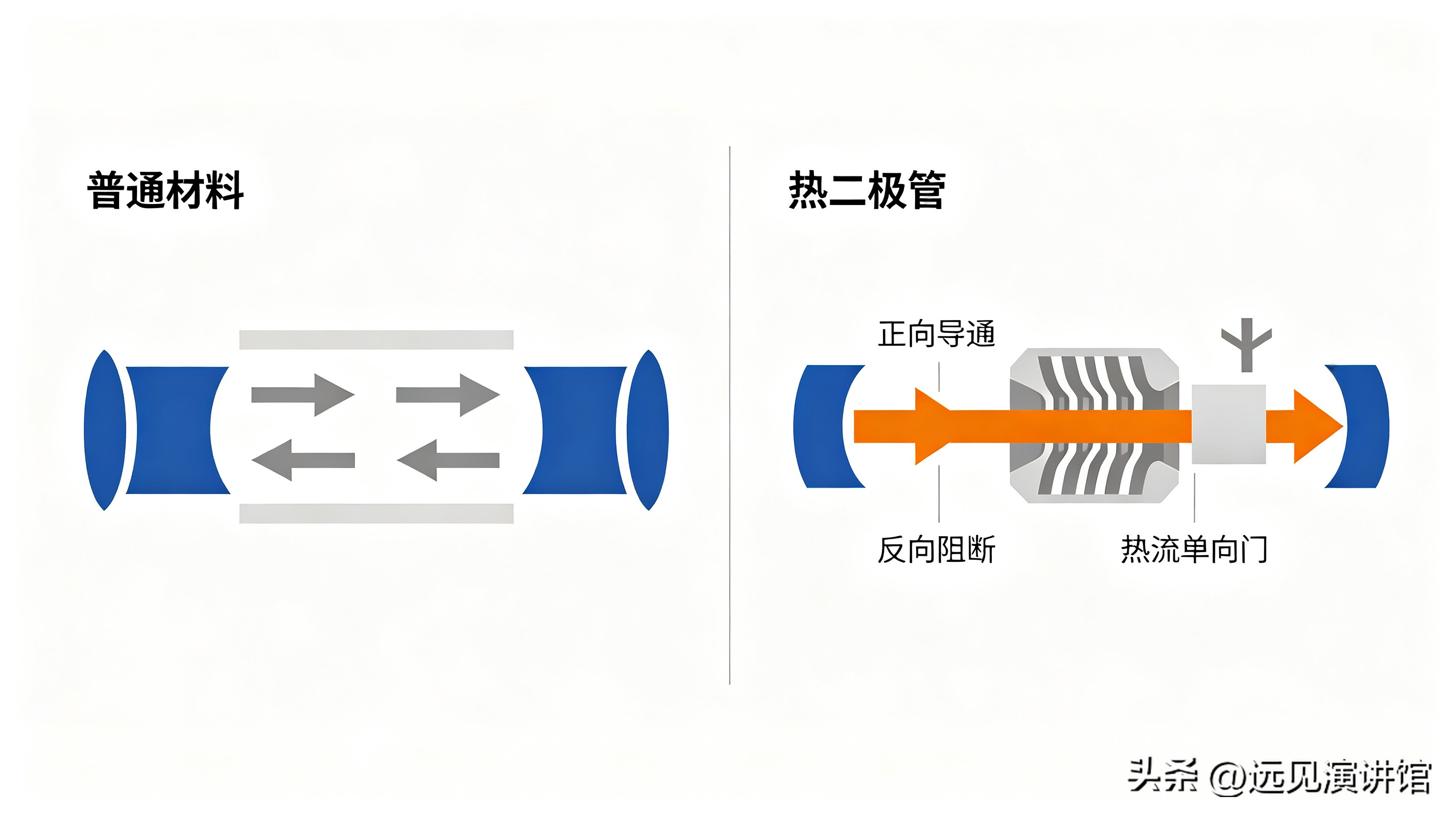
Figure: two-directional heat for general materials vs one-way contrast map for thermal diodes; display of positive guidance and reverse blockage
To make high-performance heat diodes, break the spatial symmetry of heat transfer. There are two representative routes for national scientific research: the 2d ithropogenic nanothermal diode at the university of tsinghua, which uses the acoustic density differences to achieve thermal fine-tuning of nanoscales in the 2d materials interface at the atomic level; and the large macro-impressive hypermaterial heat diodes at the xi'an, which use a combination of positive and negative thermal expansion materials to achieve a single-scale guided macroscale heat using the structural transformation caused by temperature。
The nanotropods are suitable for inside the chip, are of a few nanoscales and are directly integrated into the chip containment layer; macro imitation routes can be of a centimetre class and are directed towards battery and space equipment thermal protection. Under laboratory conditions, some of the samples have achieved a high heat-recomposition effect, are being transmitted efficiently to the heat flow and the reverse heat flow is being significantly suppressed。
However, much of the online interpretation directly claims that “thermal diode completely resolves the chip dissipation” is a serious error zone and that laboratory results do not amount to commercial products。
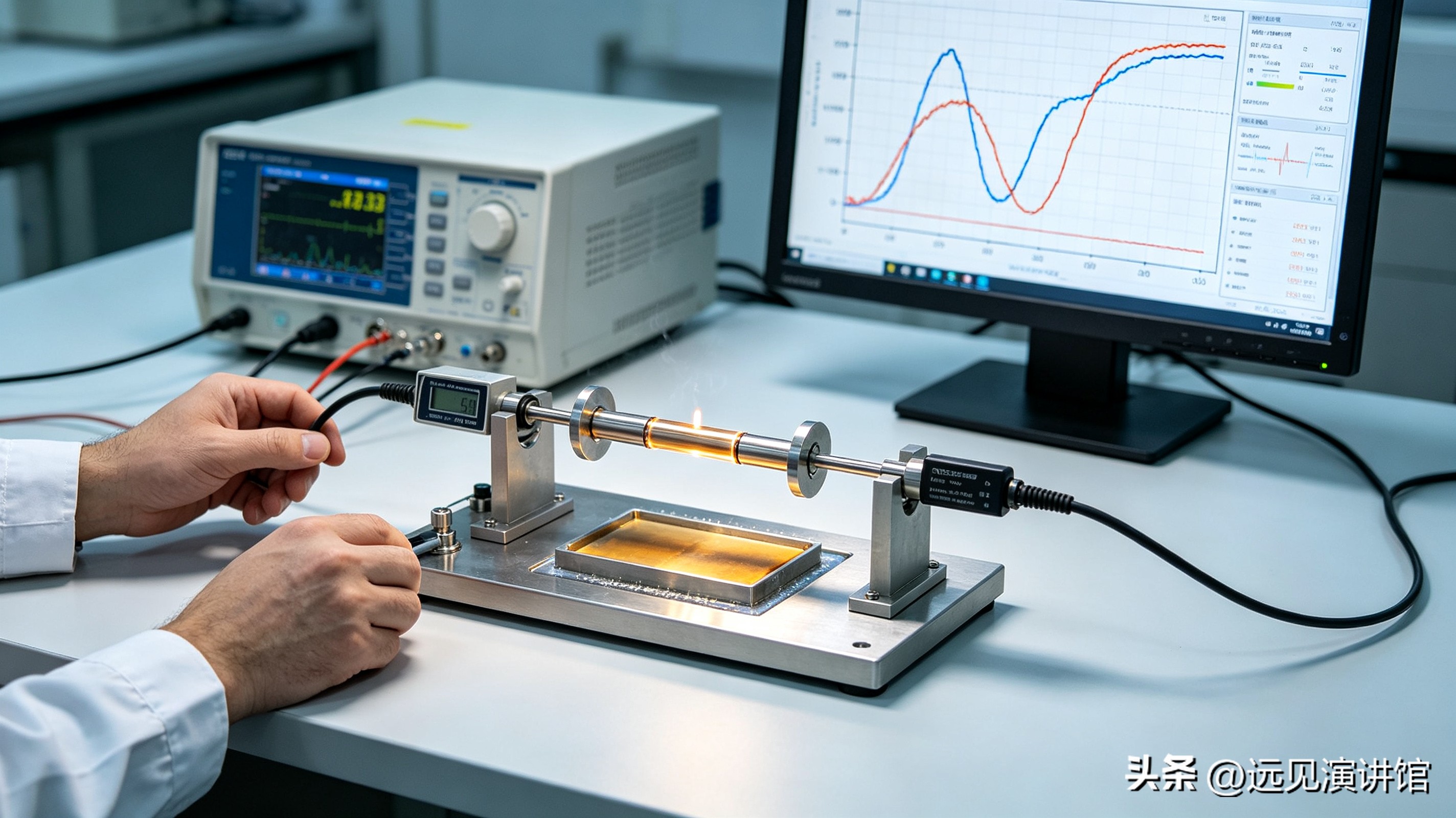
Diagram of tests at the thermal diode laboratory; contrasting test of the two-way heat flow of the device on the scientific platform
First, performance is highly dependent on temperature differentials, and the effects of mild temperature differentials are reduced. Most high-performance thermal flow effects require a cold-hot temperature differential. Cell phones and computers work in a mild and temperate environment, with a marked decrease in heat flow capacity and difficulties in meeting the desired laboratory targets。
Second, nanoscale results are reduced by magnification to large areas. The nanosamples are amazing, and once amplified to the size of the chip, battery modules, interface defects, and uneven material, they directly weaken the single-direction heat, which is one of the biggest engineering bottlenecks at present。
Thirdly, it's not a substitute for a radiator. It's a supplementHeat managementMeans. It can't just wipe out the heat. Its value: the rapid export of heat when the chip heats; and the prevention of external cooling when the external environment is hot. It cannot be a substitute for dispersing heat. It is used in combination with dissipation, liquid cooling and directed heat control。
Fourthly, the stability of long-term thermal cycles has yet to be verified. The equipment is repeatedly cold-heated, the material interface, microstructures are susceptible to ageing and failure, and is still a long way from the one million-cycle industry standard for the consumption of electronics and vehicle-borne batteries。
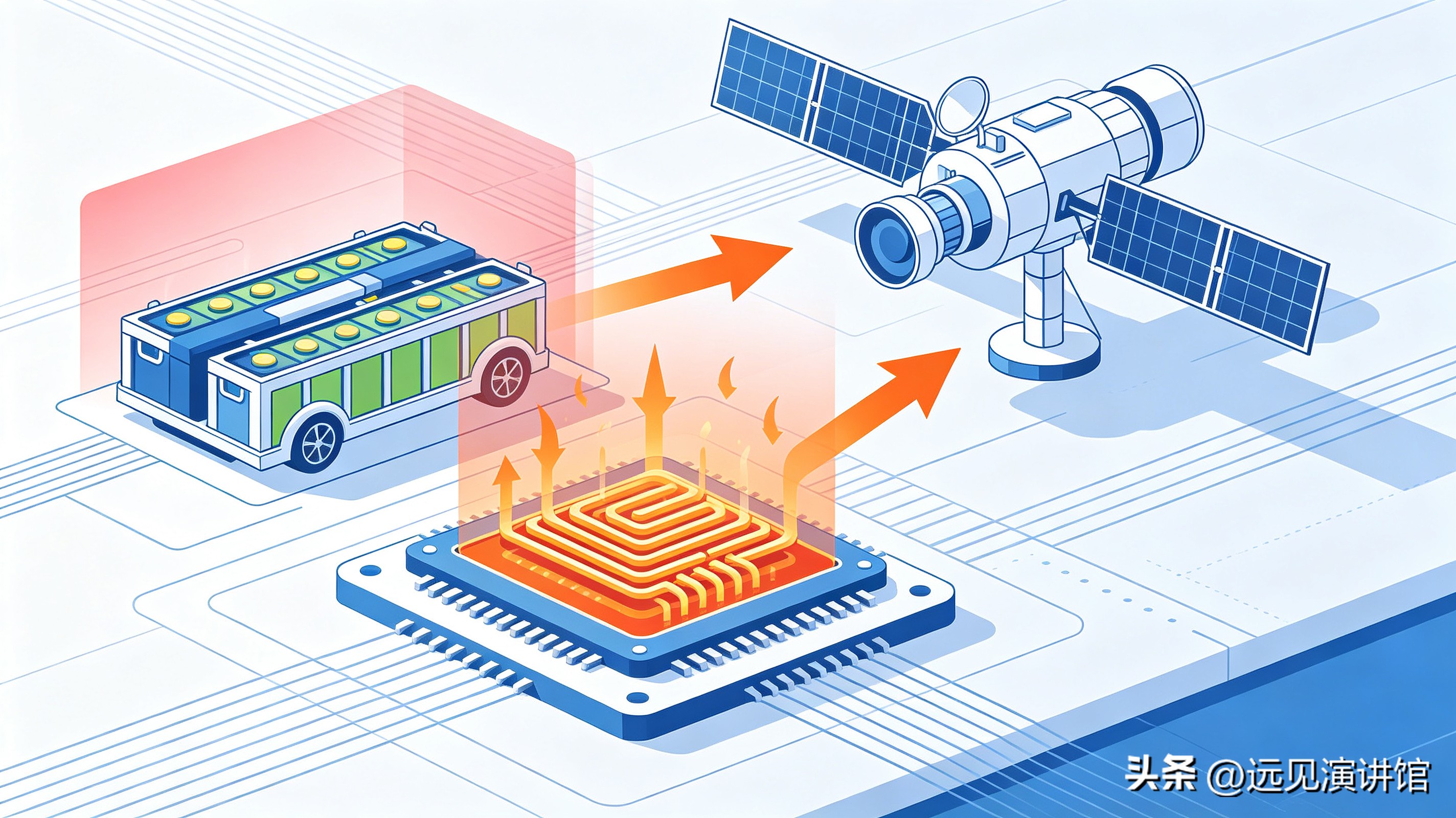
Figure: conceptual illustration of potential applications of thermal diodes; chip wrapping, power batteries, space thermal protection equipment
StandPhysical technologyPerspectives, heat diodes are the most significant, breaking the traditional human thermal management thinking. In the past, heat spreads were carried out with a view to increasing thermal efficiency and increasing the area. And the thermal diode opens up a new line of thinking: unequal control of the heat flow direction。
More realistic scenarios for the future: high-end chip containment floors to prevent high-temperature refilling of the environment; space equipment to cope with extreme temperature alternations in space day and night; power batteries, charger heat rapid export, high-temperature environments to prevent external heat intrusion。
Thermal diodes as a whole are currently in the laboratory prototype phase and there are no large-scale commercialized products. From laboratory samples to inside mobile phones, computers, new energy vehicles, a range of engineering challenges such as magnification readiness, stability, cost, etc. However, it provides an entirely new physical path for thermal management of the next generation of high-density electronic equipment。
The end of the interaction: what do you think is the greatest pain of the chip spreading? The comment section is welcome to talk。
♪ science and technology ♪









