


# i don't know #Diode# have you ever wondered how that fixed "conductive voltage" -- about 0. 7v for silicon tubes and 0. 3v for gills -- came about? Is it a fixed label of the device itself, or is it a deep physical pattern behind it? This paper will reveal to you the answer to this seemingly simple and profound question。
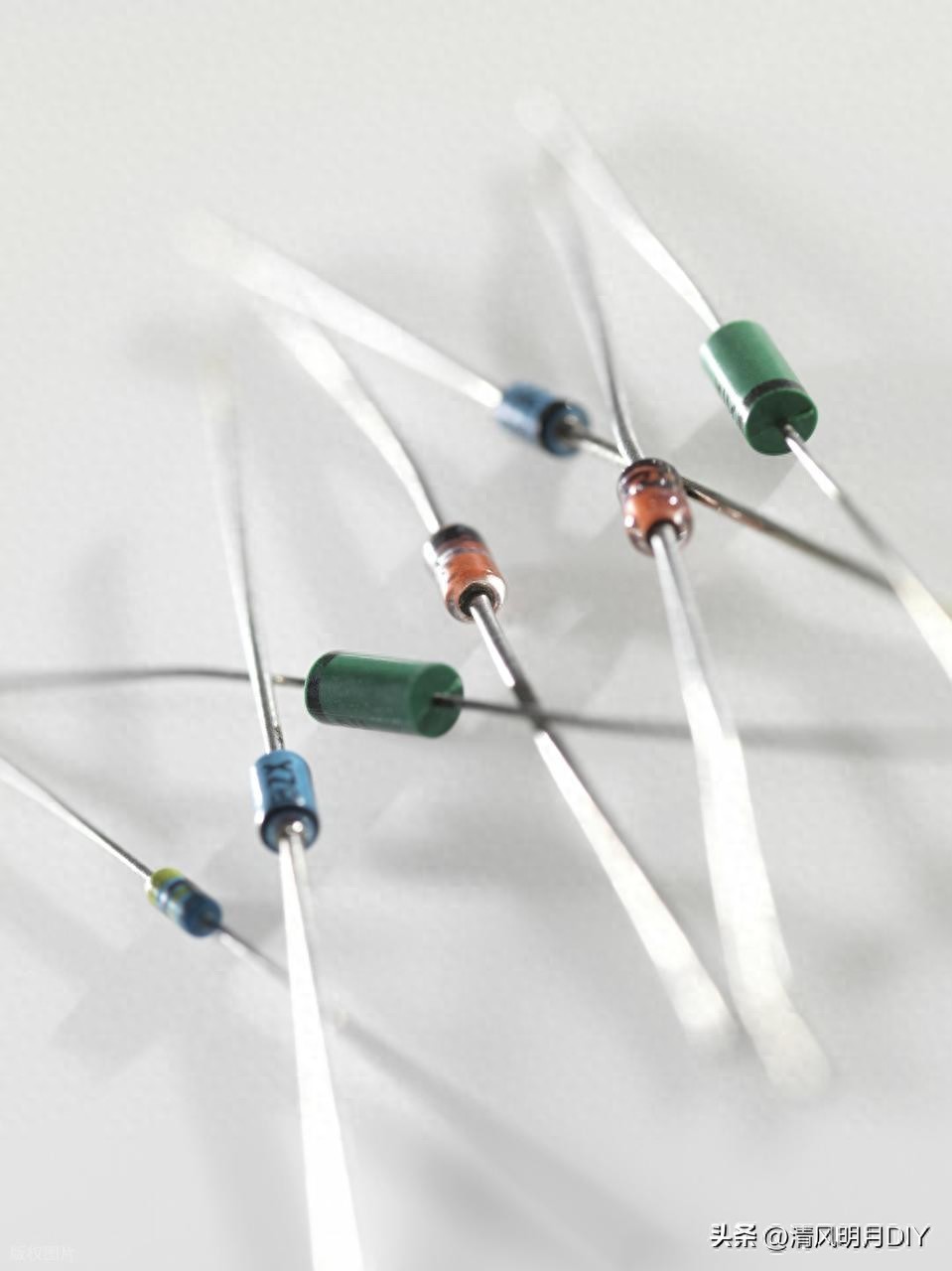
The underlying factors that drive the voltage
Core factor: ban width of semiconductor materials。
This is the first principle that determines the conductive voltage of the diodes, commonly referred to as the opening of the voltage, the threshold voltage or the positive pressure reduction. In essence, the conductor of the diodes is closely related to the internal powering of the internal pn knot, the core component of which is the prohibition of bandwidth of materials。
At constant temperature:
In theory, a simple estimate suggests that the conductive voltage of the diodes is the equivalent of the half-band width. And that's why we have the macro-impression of "about 0. 3 volts of ducts and about 0. 6 volts of silicon tubes." the greater the bandwidth of the material, the higher the energy (expressed in voltage) required to achieve the transport of the fluid, the higher the conductive voltage of the gaas device is also higher than that of silicon。
Process dependence: mixed concentration。
In the actual semiconductor device manufacturing process, another key player enters the field - mixing concentration. A real diode, with a level of mixing in p and n, is not equal and is usually based on a structure “with a focus on mixing, medium/low mixing on one side”, determined by modern flat mixing processes. Strictly speaking, the calculation formula for the built-in power of the pn knot, which is a direct theoretical base for the conductive voltage, does have a direct bearing on the commingling concentrations in p and n。
So, theoretically, mixing concentrations do participate in determining the strength of the inner field and the final threshold of the device. The calculated precise built-in power is approximately equal to “a little more than half of a ban on bandwidth”, while the actually observed “conductive voltage” that allows the current to begin to be significantly channeled will be slightly smaller than the built-in power. This layering relationship explains the clever correspondence between our macro-observations and micro-theory。
Practical conditions of access
When the cause is clear, let's look at the conditions under which a diode tube actually leads through the circuit. It is not a single factor, but a combination of the two:
Positive bias: when external voltage is applied, the level of the diode anode (zone p) must be guaranteed above the level of the cathode (zone n). The current voltage is high enough: the external positive voltage must be greater than the open voltage threshold determined by the material and process of the tube。
When both points are met, the depletion layer of pn knots within the diodes is effectively weakened, and large volumes of fluids can spread easily, forming a significant positive current, and the diodes enter our well-known state of navigation。
Why is the textbooks often unclear
Many people are often disappointed to find clear and final conclusions in their textbooks. Textbooks often elaborate formulas for internal power generation, but “what determines the conductive voltage?” this particular issue may be stopped and the experimental value may be given directly (about 0. 6-0. 7 v for silicon tubes and about 0. 2-0. 3 v for piping). This is not entirely a shortcoming, but rather a manifestation of the rigour of teaching materials. The editor needs to balance the absolute correctness of the theory and the availability of teaching: a simplified conclusion, while easy to understand, may have exceptions under all theoretical boundaries. As a result, a broad field of experience has been directly tested, sometimes more secure and less risky than the next absolute definition。
From principle to visualization
Taken together, we can build understanding logic:

At root (first) the conductive voltage is determined by the nature of the semiconductor material used in the manufacture of the diodes - the ban on bandwidth locking on the base, which determines the base height of the “voltage threshold”。
Accomplishability (regulated): specific manufacturing and mixing processes (combination concentrations on both sides), with specific setting and fine-tuning around material baseline values, leading to the determination of the precise characteristics of a particular diode tube。
Therefore, your visual use experience (the positive pressure of the silicon diodes is always about 0. 7 v, which can be used up to it) is both the result of millions of standardized manufacturing processes and, more deeply, the physical mark of god's gift of a semiconductor silicon itself about 1. 1 electro-volt bandwidth。
I hope this article gives you not only an idea but also a better idea of the underlying but crucial characteristics of diodes。









