


Based onDftAnd the minimum binaryLs OfdmSystem channel estimation technicals are relatively technicalMatlabCode
Author's introduction: science-loving matlab simulation developer, specializing in data processing, imitation, program design, complete code acquisition, paper reproduction and scientific simulation
I'm interested in getting a big matlab e-book and mathematical modelling
Personal doctrine: knowledge, complete matlab code to obtain and imitate personal information。



Introduction i. Overview of the ofdm system
The active-frequency reuse (ofdm) is an efficient digital communication technology that is widely used in the field of wireless communications, such as 4g, 5g mobile communication systems, digital audio broadcasting (dab) and digital video broadcasting (dvb). The core idea of ofdm is to convert high-speed serial data into a parallel low-speed data stream that is transmitted simultaneously through multiple active submersible waves. The data symbol rate on each sub-load wave is relatively low and the symbol cycle is relatively long, thus providing greater resistance to multi-routing decline. However, the temporal and frequency selective decay properties of wireless channels can cause a signal to be distorted during transmission, and therefore accurate belief estimates are essential for the ofdm system。
Ii. Importance of believing estimates
In the ofdm system, the purpose of the estimates is to acquire the characteristics of the channel, i. E. The effect of the channel on the signal, including the added value of the channel and the change of phase. Only by accurately estimating the channel properties can the receiving end effectively decode the receiving signal and restore the original transmission data. Inaccurate estimates of the channel may lead to the destruction of the positive intersection between sub-load waves and to the creation of inter-load interference (ici), thereby reducing the miscode performance of the system。
Iii. Estimates of transitions based on disconnected fouriers (dft)
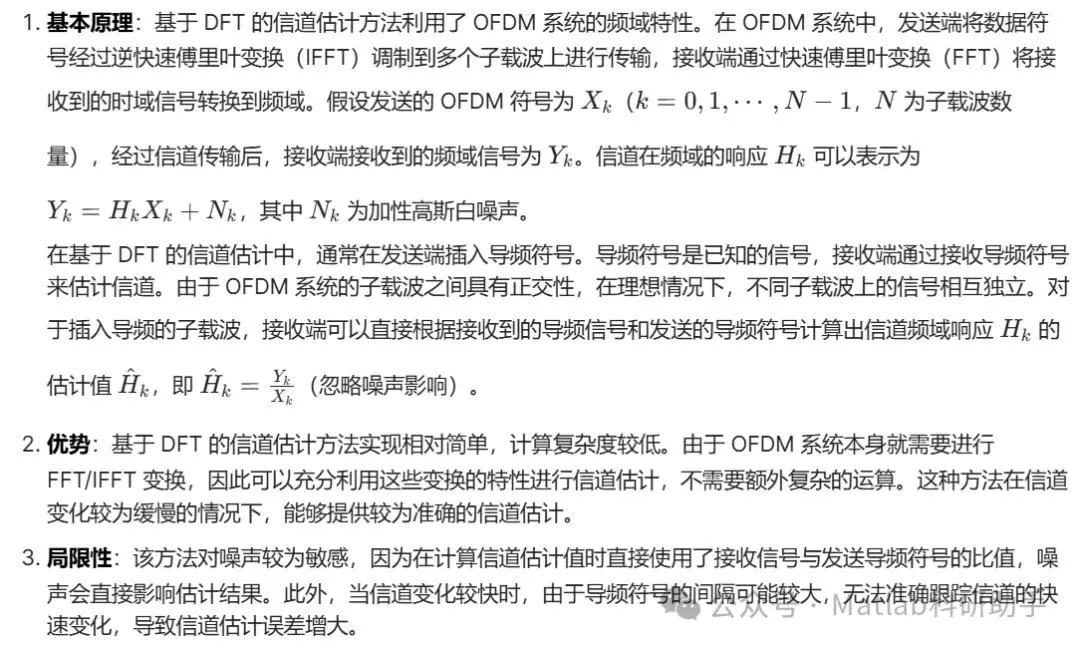
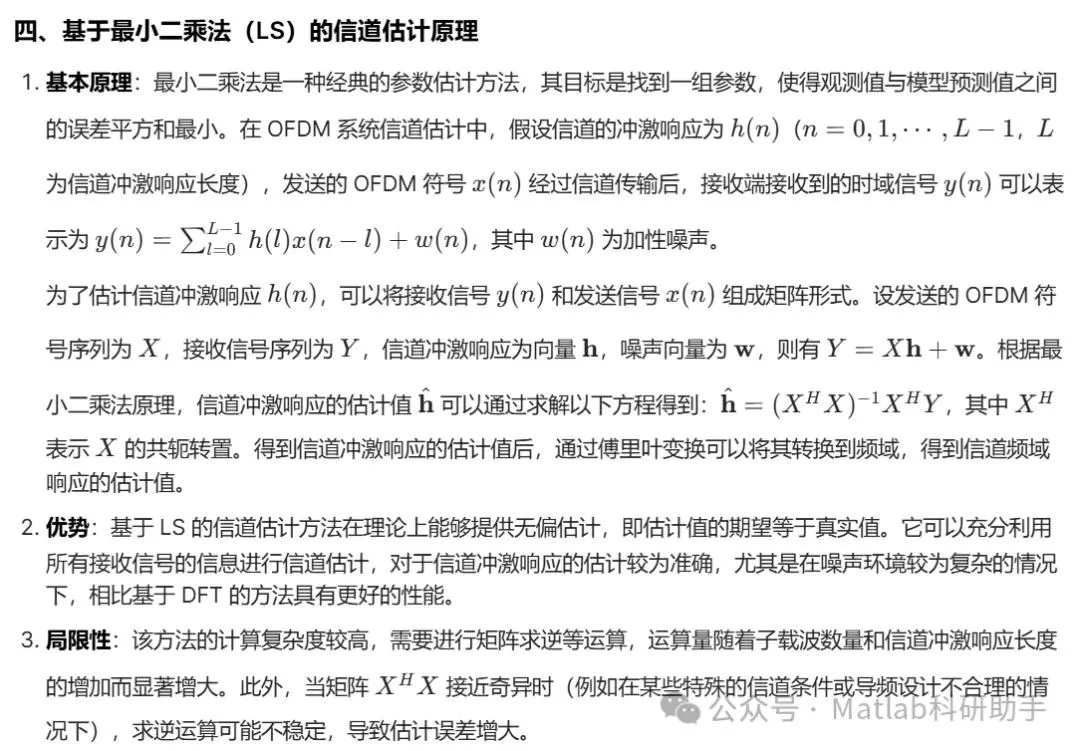
️ run results
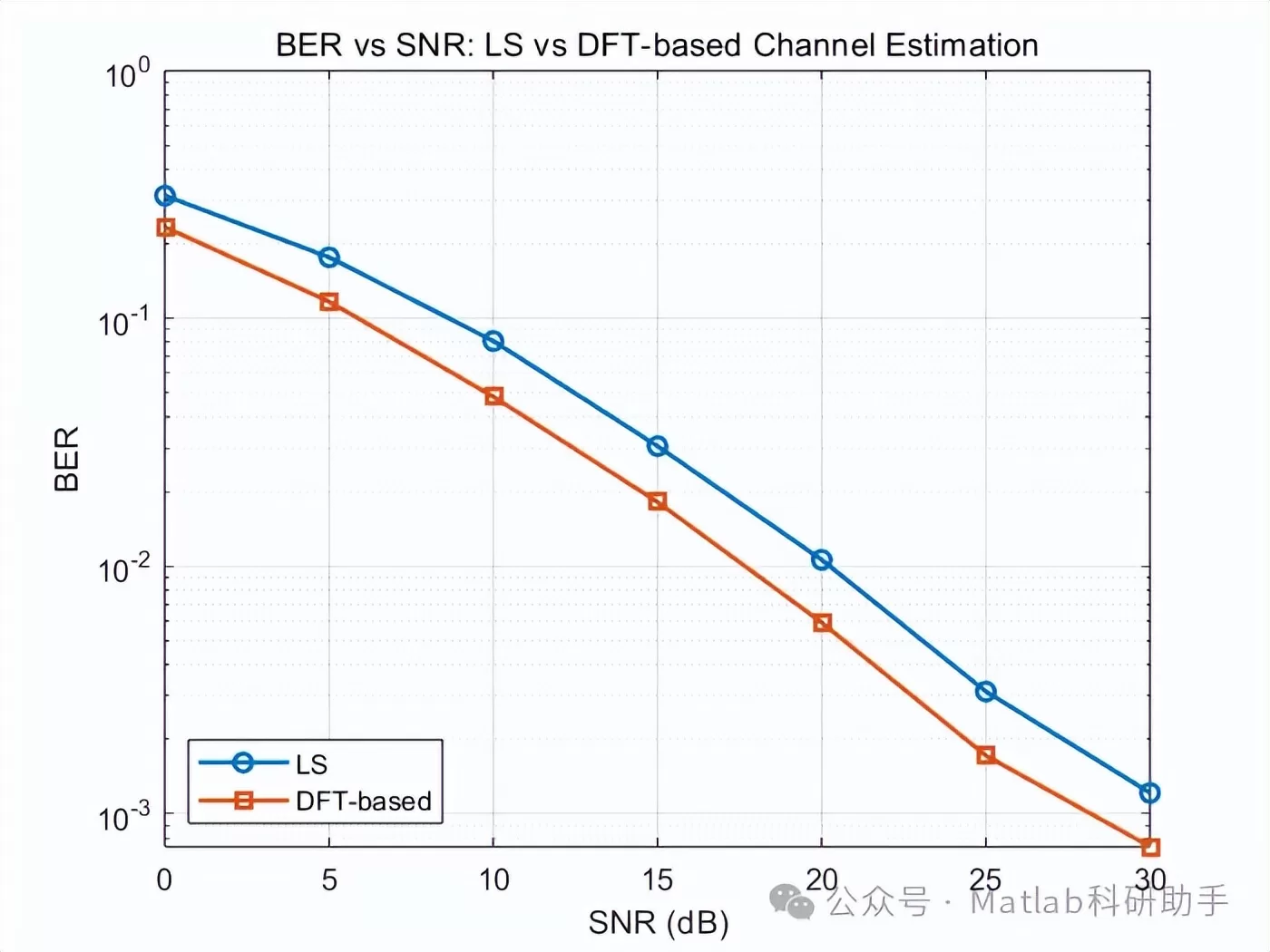
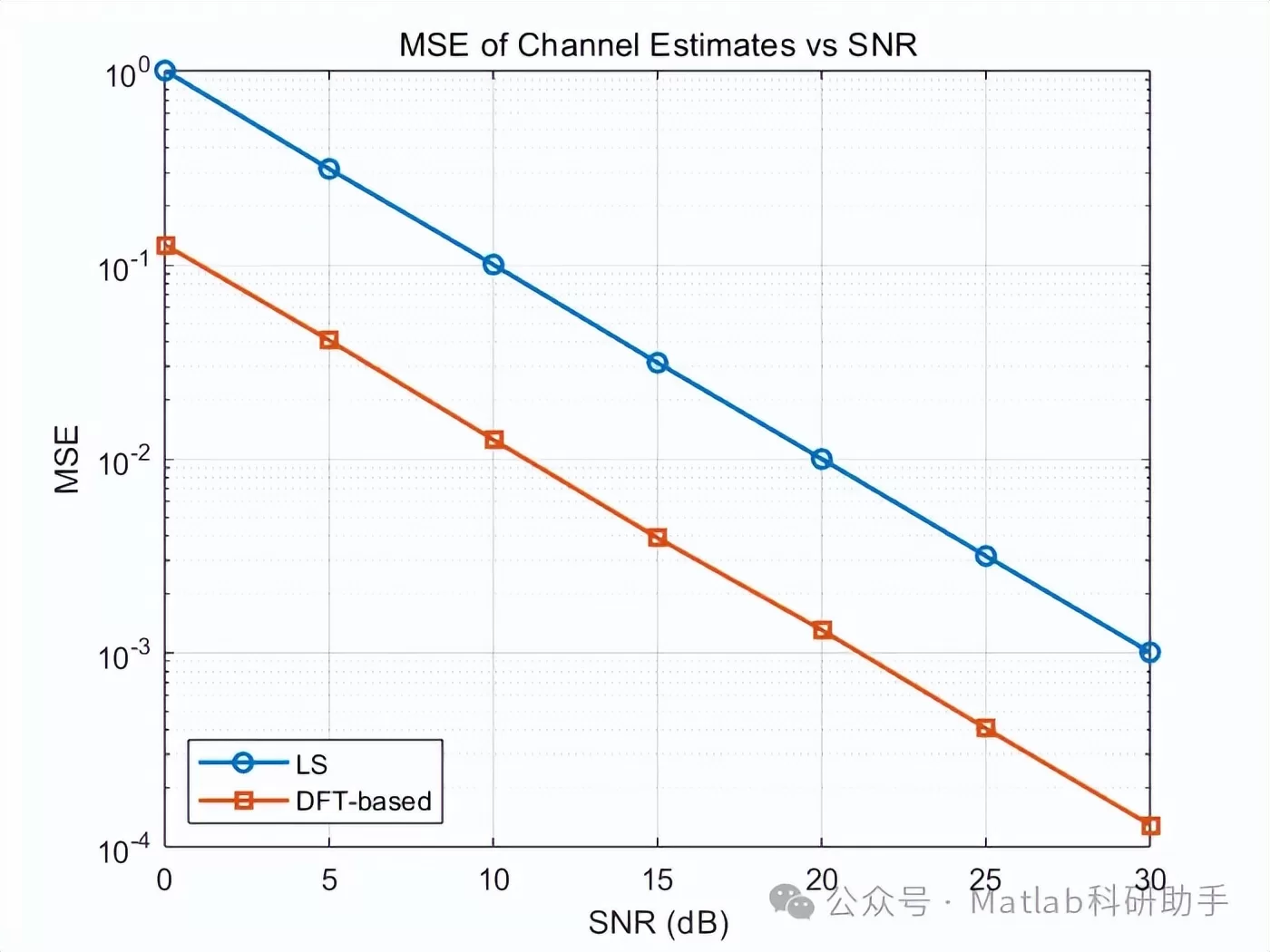
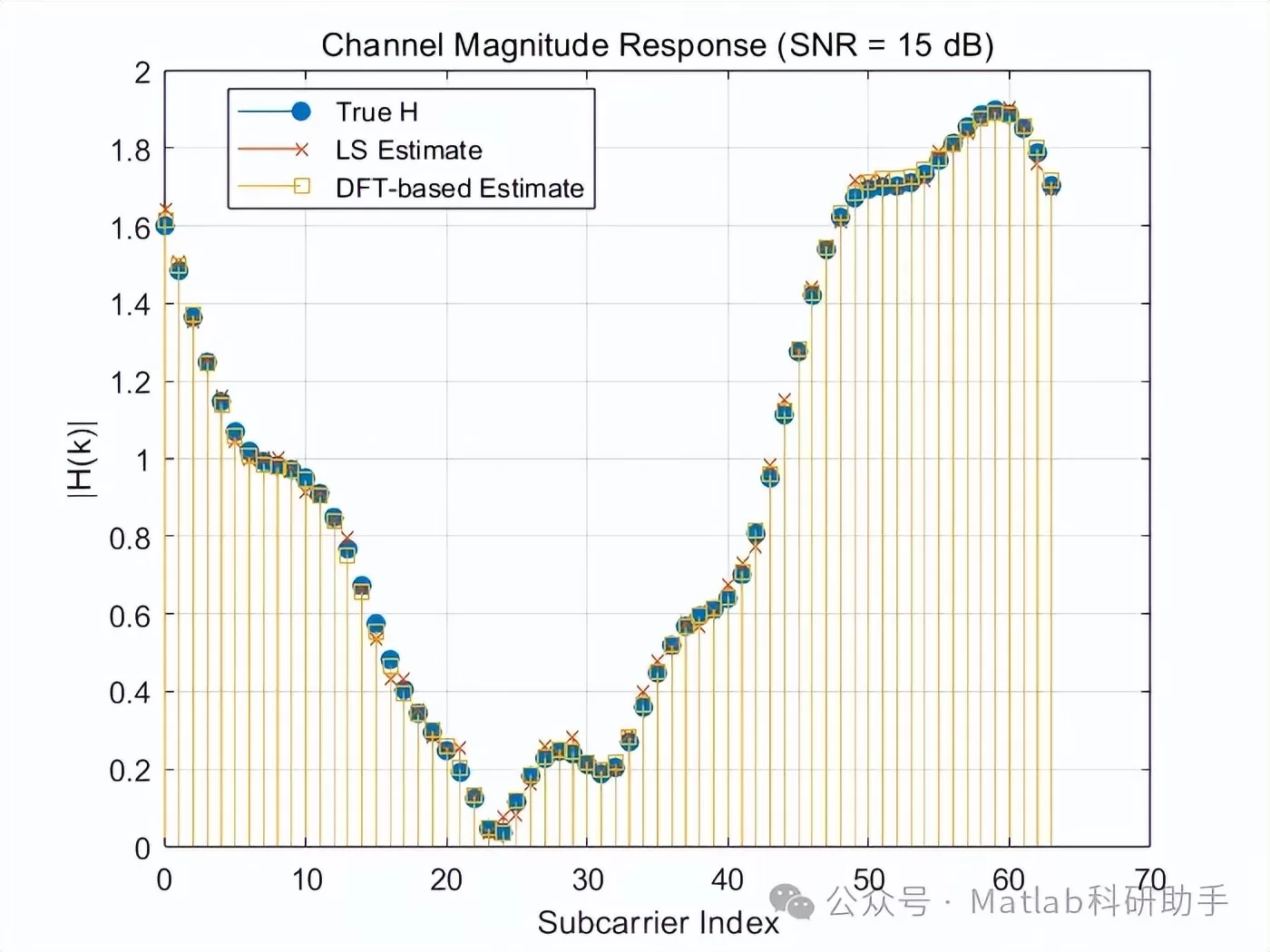
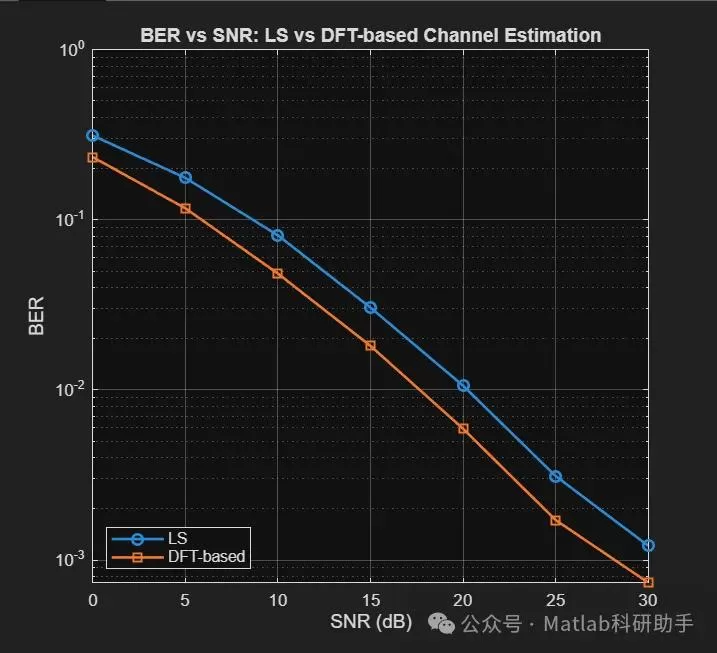
Part code
M = 4; %qpsk
K = log2(m); %bits per symbol
Tabs = 8; %channelength
Snr db = 0:5:30;
FRames = 200;
%result proallocation
Ber ls = zeros (size (snr db));
Ber dft = zeros (size (snr db));
Mse ls = zeros (size(snr db));
Mse dft = zeros (size(snr db));
For i = 1: leftth (snr db)
Snr db = snr db(i);
Snr linear = 10^ (snr db/10);
Bit err ls = 0;
Bit err dft=0;
Total bits = 0;
Mse acc ls = 0;









