


Many people stepped on the brakes without notice that the wheel had already dragged 20 or 30 metres on the ground and ran across the wheel. From the ring brakesAbsClose the ring, the line is almost 100 years away, and there's only one word at the core -- don't hug it。
I can't see the wheel
Before abs appeared, all brake systems were open. The brakes were tight, the gas chamber was inflated, the power was locked, and no sensor in the middle told the computer that the wheel was still spinning. On the european highway in the 1960s, 120 kilometres of trucks were killed on foot, the rear wheel was locked in an instant, and the steering wheel was hit with a very high probability。
There is no longer a rolling friction between the tyre and the ground after the wheel has died, and the side-to-side attachment factor falls from 0. 7 to less than 0. 2, and any shift to input or road pit pit can allow the vehicle to slide horizontally. Drivers can't fix direction at all. This is the deadliest blind zone of the ring system — just step down, whatever the outcome。
Why did the front brakes come out
In the early 1920s, the self-heaviness of cars increased from 500 to 600 kilograms to more than one ton, and the speed of cars was also mentioned from 40 to 70 kilometres per hour. Back-wheel brakes could not be stopped alone, and the first time the front wheel had been fitted with a brake. It's not an optimisation. It's just the back wheel. There's no choice。
In the late 1930s, engineers calculated the dynamic shift of the axle charge at brake: the front wheel gained weight, the back wheel lost weight, and the front wheel was able to absorb more power. Back and forth power distribution devices have been written into national legislation, cars, vans and passenger trucks have been fully equipped, and european and japanese vehicles have been the first to produce and load cars。
The distribution device won't fix the death
The pre- and post-allocation technology does shorten the brake distance, but the essence is still open. The pressure on the cylinder was adjusted to a fixed ratio, with only 0. 3 per cent of the ice and ice-coated surface pressure, and the pressure kept the wheel locked. The system does not have a wheel-speed sensor. It does not know which wheel is going to stop。
The open-ring logic is that it doesn't matter if it's set, but the road is moving in real time. Dry tar 0. 8, rain 0. 4, snow 0. 15, distribution mechanisms can only be calculated at a fixed ratio and the mixed surface is completely disabled. That's the fundamental reason abs has to be born。
The abs closed-ring principle is clear
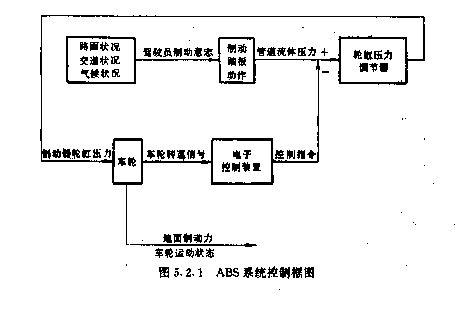
There are three things at the abs core: the wheel-speed sensor monitors the speed of each wheel in real time, the electronic control unit determines which wheel is dying, and the hydraulic pressure valves are repeatedly loosening the brake pressure of that wheel in a few milliseconds. The whole process circulates dozens of times per second, and the wheel is always stuck in the optimal range of 10 to 20 per cent slide。
Multi-country statistics for europe: 10 per cent for motorcycle accidents with abs, 8 per cent for sedans and light trucks, 4 per cent for buses, 10 per cent for heavy trucks and an average of 7. 5 per cent. The numbers do not look scary, but every 0. 1 per cent is a dozen lives, and that is the security redundancy that comes out of the ring more than the ring。
Swedish legislation lit two technological waves
In the early 1970s, the swedish government made a direct statement: all braking systems had to ensure that they did not die, and in 1975 it was written into law enforcement. For the first time ever, abs was forced by regulations to throw money into research and development. At that time, however, the product was not reliable, spare parts for repairs were broken and neither the mechanic nor the driver was paid for, and the united states market quickly abandoned it。
The federal german ministry of transport conducted a three-year test from 1969 to 1972 covering cars, buses, vans and semi-mounted vehicles, which was translated into additional ece regulation no. 13. The electronics technology matured in the 1980s, costed half, and responded from 200 milliseconds to 50 milliseconds, before the second wave actually arrived。
Cost fight from four to one
Prior to the 1980s, abs had only been in luxury cars, and the three corridors had been designed at 15 per cent of the total vehicle price. When a medium vehicle could not be purchased, the one-channel programme was introduced, with only a rear wheel or a single axle, at a reduced cost to one third. Ford's 1994 truck abs assembly rate was 94 per cent, universal。
Industry projects a global 80 per cent catch rate for new cars by 1999. From the pick-up bus to the minibus, the route fell from four to one, the price fell from several thousand to several hundred, and abs moved from a high-end configuration to a safety floor. Every time you step on a brake every day, there's a closed ring behind you。
The last time you stepped on it, it was abs working. Have you noticed how many lanes your car is? Talk to the comment section and if it's useful, send it to the driving family。









