


In recent years, artificial intelligenceAiFrom research laboratories to the mass market, they have become the central force for change in the scientific and technological industries. Whether it is a daily smart conversation, an ai painting, video generation, or an enterprise's down-site intelligence office, data analysis, automated production, ai has fully permeated life and industry. Many people are using artificial intelligence products every day, but it is not clear what artificial intelligence is, what the core technology is, and how ai is now developing. This paper interprets the system of artificial intelligence technologies in all its dimensions from basic definitions, core technologies, iterative journeys, landing landscapes and future trends。
I. What is artificial intelligence? Common core definition
Artificial intelligence, simple understanding, is technology that allows machines to simulate, extend and even transcend human intelligence. Traditional software relies on fixed codes, fixed logic, and can only perform preset instructions; and artificial intelligence relies on data, algorithms and algorithms, enabling self-learning, self-overlaying, self-judgment, complex intellectual behaviour such as identification, understanding, creativity, decision-making and prediction。
In terms of technology classification, currently the universal ai is a weak artificial intelligence, i. E. An applied intelligence focused on a single mission, such as dialogue ai, image aiGenerating aiWork can be done only in specific areas, without a sense of ownership and common thinking. The agi general artificial intelligence, which is often heard by the public, is still at the stage of theoretical research and has yet to land。
The biggest technological change in ai today is the complete shift from “identified ai” to “generated ai”, which is no longer just to understand and understand data, but to be able to create text, pictures, audio, video, codes and programmes on its own and radically change the patterns of content production and industry operations。
Ii. A core technology system for artificial intelligence
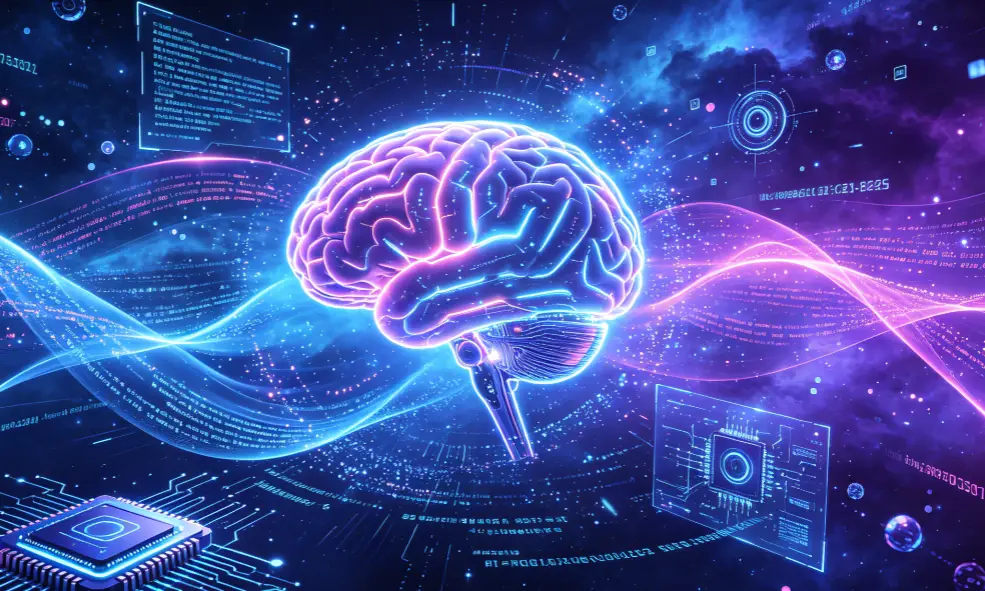
Modern artificial intelligence is not a single technology, but a complete technology closed loop consisting mainly of four core modules。
First, big data base. Data are the basis of ai's learning, whether text, picture, voice, behavioral data, which need to be cleansed, labelled, classified to produce quality training data sets. The accuracy, intelligence of the model is highly dependent on the level and quality of the data。
SecondIn-depth learningAlgorithm. As the core brain of ai, deep learning simulates human neurons and automatically extracts data characteristics through multilayered neural networks. Traditional algorithms require manual set-up rules, while in-depth learning can automatically sum up patterns through big data, making the use smarter. The current mainstream large models, visual models and multi-modular models are based on an iterative upgrading of the in-depth learning architecture。
Third, the force support. Ai training and reasoning require large parallel computing capabilities, and gpu, npu, ai-specific chips form the basis of calculation. Large model parameters jumped from a billion to a trillion, and rapid training and landing were achieved thanks to the rapid growth of the trust-force industry。
Fourth, multi-modular technologies. This is the biggest breakthrough in the last two years. The early ai can only deal with single text or images, and now multi-modular ai has a unified understanding of text, pictures, voice, video, visualization, audio and video generation, and cross-modular creation, which are the core technical underpinnings of current ai product penetration。
Iii. Artificial intelligenceTechnological developmentRecursive experience
Over the past decade, artificial intelligence has undergone three key hierarchies, which have made it possible to leapfrog from an artificial intellectual disability to a productivity tool。
1. 0 the age of traditional intelligence (before 2018): representatives are primarily identified, classified, matched and applied as face recognition, voice recognition, machine translation. At this stage, ai is not creative and can only make fixed logical judgements, with a single scene and a low error tolerance。
2. 0 age of large models (2019-2022): the birth of pre-trained mega-models, the explosion in the size of parameters, ai's ability to reason logic, context understanding, simple dialogue and content writing, and the significant increase in human experience, ai has begun to enter the mass consumer market。
3. 0 generating multimodular age (2023-2026): ai fully enters the generation age and is no longer limited to text, and can independently generate pictures, short videos, digital people, codes, 3d models. At the same time, light quantitative models, end-end ai, industry custom models are being disseminated rapidly, and ai has moved from a generic entertainment tool to an industry-required tool。
Iv. Current mainstream ai landscape
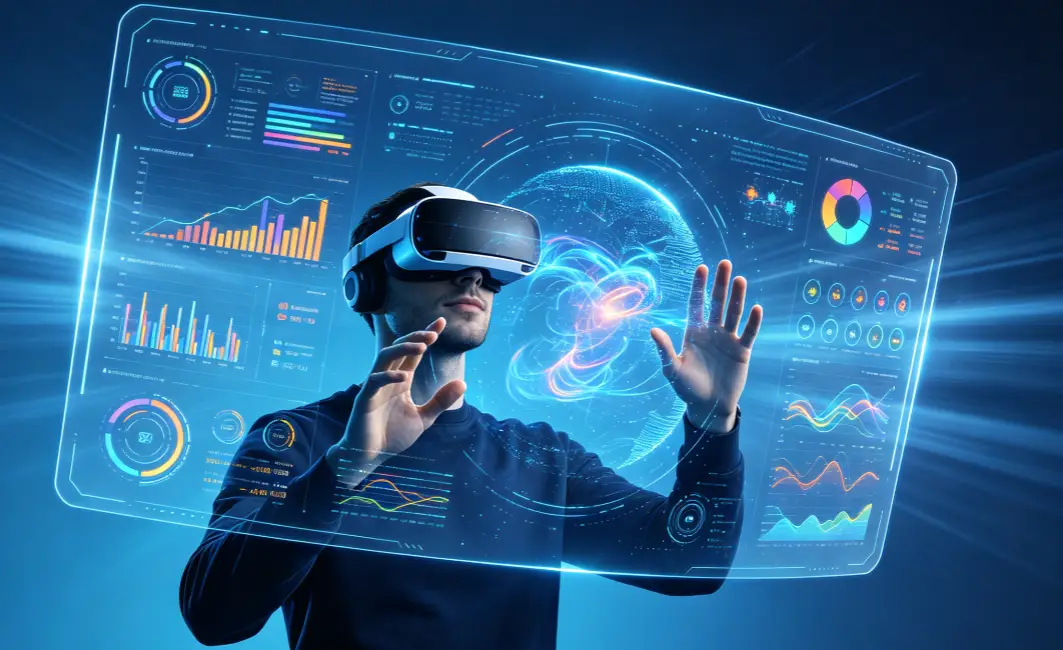
Today, artificial intelligence has moved away from the purely conceptual stage and matured its ecological landscape at the c and b ends。
At the personal consumption level, ai dialogue assistants, ai writing, ai painting, ai video clips, ai voice generation are widely available, significantly lowering the content creation threshold for ordinary users and serving as a tool for regular office, self-media creation and learning aids。
At the enterprise level, ai enables smart manufacturing, intelligent customer service, data analysis, intelligence monitoring, smart marketing, code development to help businesses reduce efficiency gains and increase automation. Aid feeds, ai bulk content generation, smart wind control have become the core productivity of electricians, the media and internet enterprises。
At the end of the technology terminal, mobile phone side ai, vehicle-borne ai, cloud-based ai is integrated to achieve smart images, smart noise reduction, scene recognition, autopilot aids, and to make hardware equipment more intelligent and user-friendly。
Current technology bottlenecks in the ai industry
Despite the rapid growth of ai, there are still clear gaps in the sector. First is the problem of hallucinations, where large models can easily generate seemingly reasonable but false content, and still have reliability deficiencies in high-precision office and professional areas. The second is the high cost of computing, large model training and reasoning, which is energy-intensive and costly and limits the landing space of small and medium-sized producers. Third is privacy and security risks, data training, content generation, and privacy disclosure. Finally, there is limited universal capacity, and currently ai still does not really understand logic and emotion, relying solely on data probability to generate content。
Vi. Future trends in artificial intelligence
In the next two years, ai will show four clear trends. First, light quantification, end-side profiling, continued reduction in model size, mobile phones, computers, local operation of large ai models, faster response and more privacy. Second, multi-modular depths are unified, graphic video 3d is seamlessly generated, and ai creations will enter the high-resolution, physical, real-time phase. Thirdly, the verticalization of the industry, the decline in universal ai heat, and the mainstreaming of industry-specific ai, fit for professional scenes such as office, industry, health, education, etc. Fourthly, ai, which integrates cloud computing, terminal hardware in depth, is like a cloud cell phone, with a new technological ecology of cloud+end+ai。
Summary
In sum, artificial intelligence is an autonomous machine learning and intelligence generation technology system based on data, algorithms and algorithms. It is no longer a distant science and technology concept, but is reshaping the bottom core of content production, business offices, smart terminals, industrial manufacturing. From the identification of intelligence to the generation of intelligence, from universal entertainment to industrial empowerment, ai's technology hierarchy is still accelerating. In the future, artificial intelligence, like the internet and cloud computing, will become the foundational capability of all scientific and technological products, continuously leading to industry-wide digitization and intellectual upgrading。









