


New and old kinetic energy conversionThe money has to be destroyed continuously, but it is worthless, who will evaluate it and how it will be evaluated, and so far it lacks a ruler that all parties recognize. Without the ruler, local finances would be trapped in a situation where they would not be able to spend, spend, and spend no one asked。
Why do you have to account for old and new energy conversions
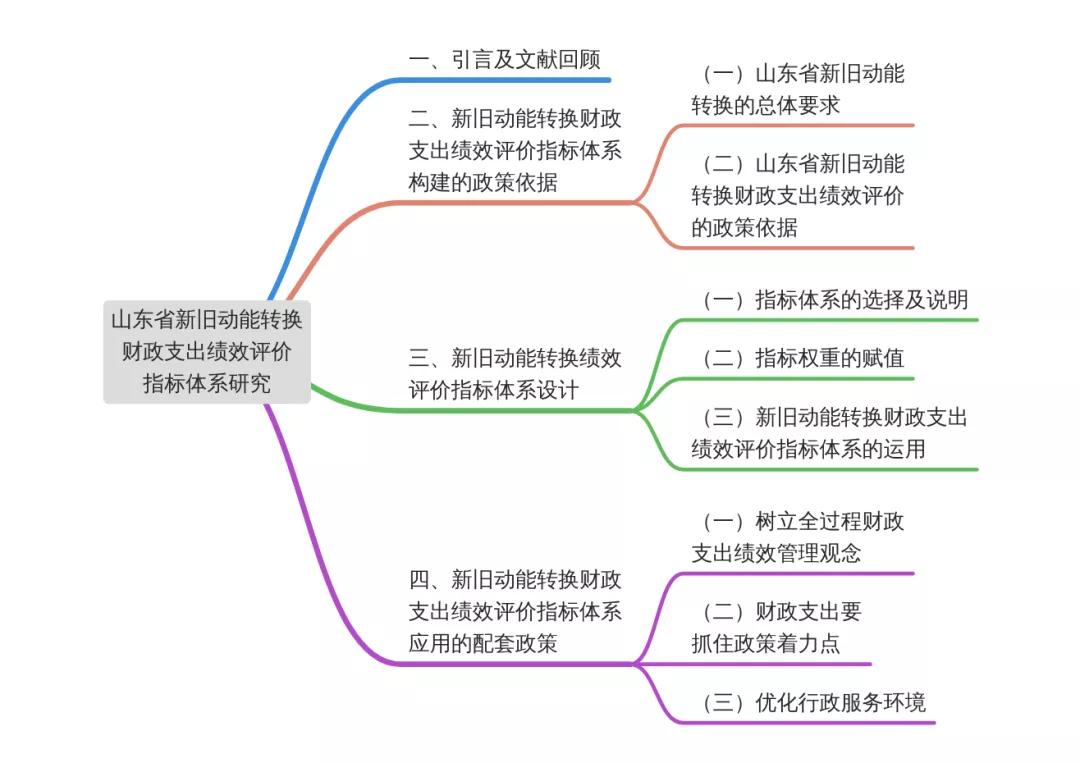
China's ecological and resource wealth per capita is at a low global level, with reforms and opening up long-term dependence on resource and energy-intensive growth. By the mid-2010s, it had become clear that traditional dynamics could not sustain the need for economic transformation. Bai et al. (2018) have classified the conversion of old and new kinetic energy as the most important structural feature of the chinese economy in recent years, while zeng (2017) has demonstrated the urgency of conversion at the five levels of tools, technology, industry, institutions and concepts。
Government ownership means that public funding will continue to be invested on a large scale. The chinese people's university's theme group (2016) clearly stated that structural reform was the driving force at the core of the transformation of old and new kinetic energy. Without a scientific performance evaluation mechanism, large amounts of financial resources could easily be turned into pepper paste, and the lack of support for that focus was wasted。
The financial resources cost four or two kilos
New and old kinetic energy conversion is not a matter for the financial family, and the central objective is to bring social capital together. The bottom logic of the overall policy design is that the fiscal policy is four or two, driving the market out。ShandongIn january 2018, the general programme for the construction of an integrated zone for new and old dynamic energy conversion was launched, setting out a new dynamic energy-led pattern by 2022, with a comprehensive breakthrough in the five dimensions of quality efficiency, innovation, ecological environment, institutional mechanisms and an open economy。
Financial resources must be directed, and where, how much, and what can be quantified, they need to be tracked. If social investors do not see clear financial signals and expectations of returns, the conversion will remain in redhead documents and will not really land。
Performance management requires good steel in the blade. Let's go
New and old dynamic energy conversions must be implemented at all levels of finance in strict compliance with performance management requirements. In conducting the evaluation of fiscal science and technology expenditures in tantai (2015), the project was divided into support units and support to enterprises, with indicators and criteria set separately. Shaw peng (2010) sets the indicators from target positioning, inputs, processes, outputs, outcomes, impacts and management, with a hierarchy of analysis used for weighting and empirical testing。
These approaches work on a single-purpose basis, but old and new dynamic energy conversions are cross-cutting and cross-tiered expenditure packages covering industry, environmental protection, science and technology, and regional development, and cannot simply be replicated in an evaluation template for a specific fund。
Shandong is a ready-made policy test field
Shandong was the first pilot province in the country to convert old and new kinetic energy. Huang xiao an (2017) compares shandong to the nation and states that shandong's specificity lies in the need to both phase out large amounts of backward production capacity and simultaneously develop new kinetic energy, both of which must go simultaneously. Zhang et al. (2018) have detected a high rate of energy growth in shandong, which is highly dependent on a shift in government functions, market-driven processes and industrial restructuring。
W. Xue et al. (2019) evaluated shandong using a blended model of dematel-anp combined with dq-gra, showing an increase in conversion effectiveness over the years 2015 to 2017, indicating that earlier policies had begun to show results. Luo goo qin and zhao bin (2019) returned using panel data from 2004 to 2017 in the north-west province, revealing patterns of movement of old and new kinetic energy at different levels of development。
How does the indicator system work
The first step in setting up the indicator system is to refine the expected objectives of the financial transition. Sampling a sample of 300 agricultural science, technology and innovation jobs in the north of lake wang jian (2014), indicators are divided into three components: project decision-making, project management and performance. Lu and wang weiqi (2007) evaluate provincial public education expenditure using a multilevel system of indicators. Zhang ten fei and yang jun (2019) used the dea window to analyse the performance of inter-provincial green development and to test the actual effects of fiscal spending on environmental protection。
The second step is to break targets into quantifiable indicators in accordance with the principles of science and practicality, while the third step is to empower and empirically test. Zhao min and wang rey (2016) placed particular emphasis on key elements of quality control, including consistency in data acquisition and transparency in the evaluation process, to ensure that evaluation findings were subject to external audit and not self-expression。
The hard part of the package is not broken
The vast majority of research on the implications, pathways and policy recommendations of the shift in focus, which is now available in the literature, has very little discussion of government-led evaluations of fiscal expenditure performance. The fiscal expenditures for the conversion of old and new dynamic energy cover multiple areas and are a package, not one that can be summarized by a specific fund. Existing individual performance evaluation studies are difficult to move directly to and need to be redesigned。
The way forward lies in the design of a cross-cutting set of evaluation guidelines based on the policy objectives and implementation characteristics of the conversion, accompanied by data collection, third-party audits and results disclosure mechanisms. Only by solid evaluation and sustained public funding can it be truly translated into a growth engine for the new economy, rather than into an unchallenged bottom-up hole。
Have the effects been systematically evaluated in your city or province, after the investment in old and new energy conversions? Welcome to the comment section for your observations, which you find useful, and forward them to friends with whom you work financially。









